Knee Meniscus Tear Rehabilitation: Evaluation and Options

A knee meniscus tear can raise practical questions: What might an evaluation involve, and how does rehabilitation fit into care? Non-surgical care for a knee meniscus tear is not one fixed plan. A provider may consider how symptoms began, what movements are difficult, examination findings, imaging, other health factors, and what matters in daily life before discussing next steps.
Review care services and consultation options
What is the meniscus, and why does the type of problem matter?
The menisci are two crescent-shaped pieces of cartilage in each knee, positioned between the thighbone and shinbone. They help distribute load through the joint and contribute to stability. A tear describes a change in this cartilage, but that label alone does not explain how much it affects a particular person.
Meniscus problems can occur after a sudden twist or pivot, or develop gradually alongside age-related changes in a joint. A person may notice pain along one side of the knee, swelling, stiffness, discomfort with bending or turning, or a sense that motion is limited. Some people have a tear visible on imaging without symptoms that clearly match it. Others have knee symptoms with more than one possible cause. The same words in an imaging report can describe different situations, so the phrase alone cannot determine the right next step.
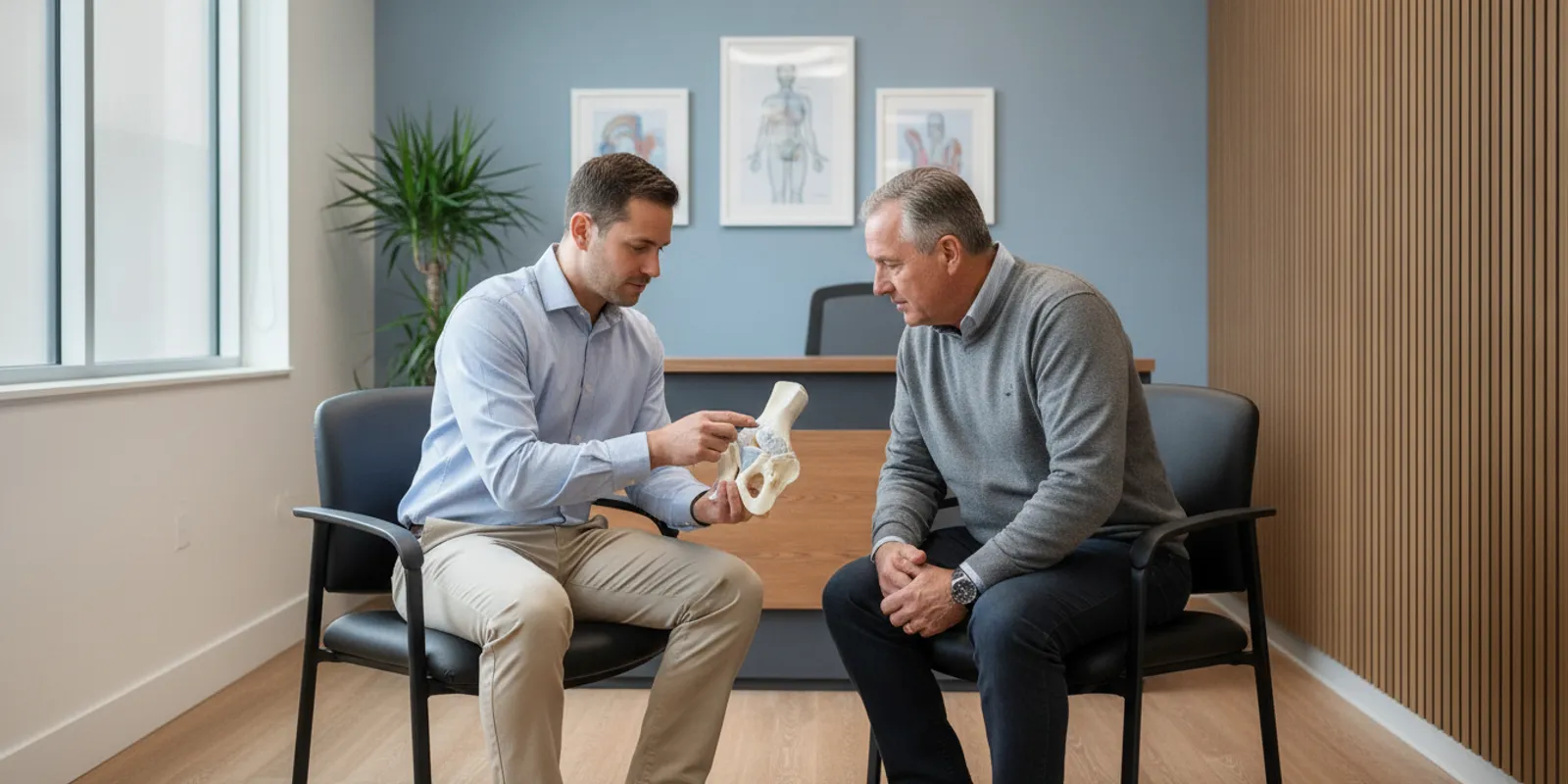
A useful conversation focuses on the whole picture rather than an imaging phrase alone. The location and pattern of symptoms, the way they affect activities, findings on examination, and other knee or health conditions can all affect which options are appropriate to discuss. The goal is not to self-diagnose from a symptom list, but to give a provider clear information and understand the reasoning behind an evaluation.
Why should an evaluation come before choosing rehabilitation?
An evaluation can help clarify whether rehabilitation is a reasonable option to consider and whether another assessment is needed. It is not a promise about results or a substitute for an individualized medical decision. It gives the patient and provider a chance to connect the reported problem with the findings and decide what questions remain. This distinction matters because a general article cannot test the knee, review a complete history, or account for a person's other conditions.
A clinician may consider whether symptoms could relate to another knee structure or a broader joint condition. Pain, stiffness, and trouble with stairs are not unique to meniscus tears. The aim is to avoid assuming that one scan finding explains every symptom, and to make sure a plan accounts for relevant health history and the tasks that have become difficult.
Research has examined exercise-based physical therapy and surgery for some people with degenerative meniscal tears. For example, a clinical trial published in JAMA Network Open compared exercise-based therapy with surgery in patients with a degenerative tear. That study is one part of a larger evidence discussion, not a rule for every tear or every person. Study populations, tear types, and personal health circumstances differ. A provider can explain how evidence relates, or may not relate, to a specific situation.
What details about symptoms may a provider ask about?
Clear, concrete examples help make an evaluation more useful. Before a visit, consider noting when the knee problem started and how it has changed. If it began with a particular movement, describe what happened without trying to diagnose the injury yourself. If it came on over time, note when you first noticed a change and what has changed since. If you cannot recall an exact date, an approximate timeframe is still useful.
- Where it hurts: Point to the area, such as the inner or outer side of the knee, the front, or a broader region. Say if the location varies.
- What it feels like: Describe pain, aching, stiffness, swelling, catching, or a sense of instability in your own words.
- What brings it on: Mention bending, straightening, turning, stairs, getting up from a chair, standing, or other activities if they affect symptoms.
- How it changes: Explain whether symptoms vary during the day, after activity, or with rest, and whether the pattern is improving, worsening, or staying similar.
- What you have tried: Include previous care, exercises, medication, braces, injections, or other approaches, and what you noticed. Do not stop or change prescribed care based on a blog article.
- What you want to do: Name daily tasks or valued activities you hope to manage, such as household routines, work, or getting around comfortably.
A short symptom and activity note can help if keeping one is comfortable and does not delay needed care. Record the task, what happened, and how the knee felt afterward. There is no need to provoke pain to collect information. Stop an activity that feels unsafe and discuss it with a qualified provider. You can also note what you avoided because you were concerned, as that can help describe the effect on daily function.
What might a physical examination include?
The exact examination depends on the person and setting. A provider may ask permission to observe walking or a simple movement, assess knee motion, and check areas around the joint. They may use hands-on examination techniques or ask about comfort during specific positions. No single maneuver should be treated as a complete answer in isolation. A clinician may explain what a test is intended to explore before asking you to take part.
A discussion can include how the knee bends and straightens, whether swelling is present, and which movements reproduce the reported symptoms. A provider may also ask about balance, strength, or how the knee behaves during a task. These observations can help describe function and guide a conversation about whether rehabilitation should be considered, but they do not guarantee a particular diagnosis or result. Examination findings are interpreted with the history and any relevant records.
Be candid if a movement is painful, feels unstable, or causes concern. You can ask what a test is intended to assess and request that it be stopped or modified. If a movement is not appropriate for you, say so. A careful evaluation should take your comfort, health history, and ability into account. You do not need to demonstrate a difficult activity merely to prove that it is difficult.
How do imaging and medical history fit into the discussion?
A provider may ask whether an X-ray, MRI, or other imaging has already been done and review the report or images if available. Imaging can add information, but it needs to be interpreted alongside symptoms and examination findings. A scan does not, by itself, establish which option is best or whether a specific finding is the source of discomfort. Ask how the described finding relates to the concerns you reported and what other explanations remain possible.
Bring copies of reports when possible, along with a list of relevant diagnoses, prior knee injuries or procedures, and current medicines. Mention other conditions that affect movement, balance, sensation, or recovery, as well as any restrictions another clinician has given you. If you are unsure whether a detail matters, share it and let the provider decide. Include supplements or non-prescription medicines if the clinician asks for a full medication picture.
Ask the provider to explain unfamiliar terms in plain language. You might ask where a tear is described, whether the report mentions other joint changes, and what remains uncertain. It is reasonable to ask how the clinical picture supports the options being discussed and whether additional evaluation or a specialist opinion is recommended. If you already have a report, you can bring it rather than relying on memory.
What role may rehabilitation have?
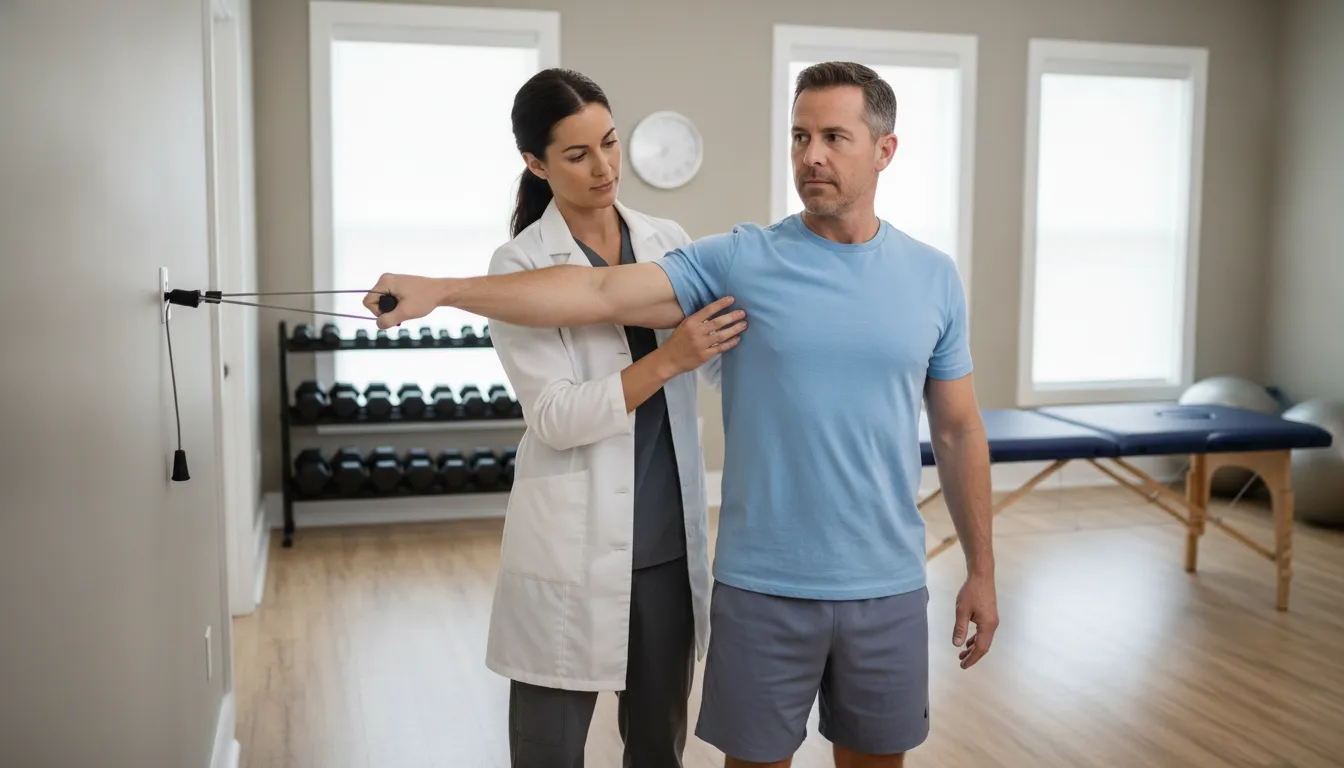
Guided rehabilitation exercise is an option that may be discussed for some knee problems, including some meniscus tears. The purpose of an evaluation-led rehabilitation conversation is to consider function and identify whether a tailored approach makes sense, not to promise that a tear will disappear or that symptoms will resolve on a set schedule. The conversation can include what rehabilitation is intended to address and how it would fit with other care.
If rehabilitation is being considered, ask what the evaluation would cover, who will coordinate care, how the approach would account for your medical history, and how you can raise concerns. Your clinician may discuss movement, strength, flexibility, balance, and activities important to you. The details should reflect the evaluation, not a generic exercise list copied from the internet. Ask how the activities would be selected and what to do if a movement feels wrong.
Any activity plan should be discussed with a qualified professional who understands your situation. A blog cannot tell you which movements, repetitions, or loading level are appropriate. Avoid trying to push through sharp or worsening symptoms, and ask for guidance if a movement causes a new concern. The useful question is not simply which exercise is best, but what is appropriate to assess and address in your case. You may also ask how the professional will take account of other health factors or limitations.
In a review of treatment approaches for meniscal tears, authors discuss evidence and considerations around exercise-based care and other treatment paths. Read the evidence-based review of meniscal tear treatment as background for questions, not as an individualized recommendation. Evidence evolves, and the right interpretation depends on the type of tear, symptoms, and a person's overall health. If you read research online, ask how closely the participants and intervention match the question you are trying to answer.
What other options may be discussed?
Rehabilitation is not the only possible topic. Depending on the evaluation, a provider may discuss continued observation, activity adjustments, further assessment, referral to another clinician, or a surgical opinion. The options depend on the person's symptoms, goals, health, examination, and available diagnostic information. Mentioning an option does not mean it is recommended or that it is suitable for everyone.
A discussion of alternatives does not mean every option is suitable or that one must be chosen immediately. Ask what each option is intended to address, what uncertainties remain, and what trade-offs may apply. If a procedure is mentioned, ask who would perform it, what it involves, what risks and limitations apply, and what non-surgical alternatives are relevant to consider. You may ask what factors would lead a provider to recommend an additional opinion.
For broader context on the center's scope, see its pages about pain and joint care and regenerative medicine. These pages are general service information, not a statement that a particular service is appropriate for a meniscus tear. A provider should discuss whether any option fits the evaluation and explain relevant limits. Ask for clear information about the purpose and evidence for any suggested approach.
How can you set useful goals without assuming an outcome?
Goals are most useful when they describe a real-life activity rather than a promised medical result. Consider which tasks are important and what you would like to discuss: managing a flight of stairs, standing through a routine, getting in and out of a car, or returning to a specific household responsibility. Share what is difficult now and what a meaningful change would look like to you. These details can help focus a conversation without setting a guaranteed result.
Ask how progress would be reviewed if you and the provider decide to pursue a plan. A review might consider your experience, activity tolerance, and relevant examination findings. Ask what would prompt a reassessment, a change in approach, or a referral. Agreeing on how to communicate concerns can be as important as discussing a starting plan. You can ask how often the plan will be revisited and who to contact if symptoms change between visits.
It is also reasonable to define what would not work for you. Consider appointment logistics, time, transportation, your other responsibilities, and whether you need a family member or another clinician involved in the discussion. A practical plan should be understandable and should leave room for questions and informed choice. If a suggestion conflicts with a known medical restriction, mention that before deciding on next steps.
When should knee symptoms receive prompt medical attention?
Seek prompt medical advice for a sudden major change, a significant injury, inability to bear weight, a knee that becomes very swollen or locked, or symptoms accompanied by fever, marked redness, or feeling seriously unwell. These examples are not a complete triage guide. If you think the situation may be urgent, contact emergency services or a qualified medical professional rather than waiting for a routine appointment or relying on an online article.
If symptoms are persistent or limiting everyday activity, arrange an appropriate evaluation even if there was no single injury. A provider can help determine what assessment is warranted. Do not use an article to rule out a serious problem or to delay care when you are concerned. When in doubt about urgency, contact a qualified medical professional for guidance.
What questions can you bring to an evaluation?
Writing down a few questions can make a conversation easier to follow. You do not need to ask everything at once. Choose questions that address your main concerns, and ask for clarification if an answer uses unfamiliar medical language.
- What findings support the possibility that my symptoms relate to the meniscus?
- Could another knee or health issue help explain what I am experiencing?
- What additional assessment, if any, would help clarify the situation?
- Is rehabilitation an option worth considering in my case, and what would the evaluation involve?
- What other options should I understand, and what are their limitations?
- How would we review whether an approach remains appropriate for me?
- What symptoms or changes should prompt me to contact a clinician sooner?
- How do my other conditions and medicines affect the choices I should discuss?
You can also ask for a written explanation of the next step and who to contact with follow-up questions. If you want another opinion, ask how to obtain imaging and records. The aim is to understand the decision, not to rush into a treatment choice. If a provider recommends waiting or further evaluation, ask what that means for your daily activities in the meantime.
How can you compare possible care approaches?
When several paths are discussed, compare them using the same questions rather than focusing on a single label. Ask what concern each option is meant to address, what information supports it, and what is still uncertain. A provider should be able to explain why a recommendation fits the findings and what alternatives remain reasonable to discuss.
- Purpose: What is the intended aim of this option, and which symptoms or functional concerns is it meant to address?
- Evidence and limits: What is known about this approach for people with a similar type of problem, and what cannot be predicted?
- Practical demands: What visits, time, activity changes, or coordination might it involve?
- Risks and safeguards: What possible downsides should you understand, and what should you do if symptoms change?
- Review point: When and how would you discuss whether the approach still makes sense?
These questions can help make a conversation more balanced. They are not a way to choose care without clinical input, and an option that fits one person may not fit another. If an explanation is unclear, ask the provider to restate it in everyday language. You can take notes, request time to consider a decision, and involve another clinician when appropriate. Comparing options in this way can also make it easier to identify what information you still need before making a choice.
How do other knee conditions fit into the picture?
Knee symptoms can have overlapping explanations. A person may have a meniscus finding as well as changes in other joint structures, or symptoms may not correspond neatly to one image or test. A provider may consider whether the reported experience and examination suggest that more than one factor deserves attention. The point is not to assume several problems are present, but to ask what the available evidence can and cannot explain.
For background on a related but distinct topic, Sigma Core has an overview of knee osteoarthritis considerations before surgery. It should not be used to assume that osteoarthritis is present or that the same considerations apply to a meniscus problem. Similarly, the article on factors that can contribute to joint pain offers general context, not a diagnosis. Ask a clinician how the evidence and terminology relate to your own symptoms.
It may help to give the provider a full account of your health rather than concentrating only on the knee. Previous injuries, procedures, other conditions, medicines, and difficulties with balance or mobility can matter when considering next steps. If another clinician is already involved, ask whether records or coordination would be useful. Tell the provider if an activity limitation is due to more than one health concern.
How can you prepare for a useful conversation?
Before an appointment, write down your top concern and the daily task that is most affected. Bring symptom notes and available reports, but do not worry about arriving with a diagnosis. A clear description of what changed, what you have tried, and what you want to understand is often more useful than trying to interpret a scan on your own. If time is limited, put your most important question first.
During the conversation, pause when you need clarification. You can ask the provider to summarize the main findings, explain the options in order, or tell you what information is still missing. If a proposed step does not feel manageable, say why. The discussion should include your questions and preferences, not just a list of possible procedures or exercises. It is fine to ask for a moment to make notes or to have a family member help you remember details.
Afterward, review what you understood: the working explanation, recommended next step, any precautions, and how to follow up if your situation changes. If you are not ready to decide, ask what is safe to do while you consider the information and whether there is a reason not to wait. A careful plan should make its purpose and limits understandable. For information about the organization and its approach, visit the Sigma Core overview. General website information cannot replace an examination or determine whether a specific service is suitable.
Explore knee and joint care information
Frequently asked questions
Does a meniscus tear always require surgery?
No single answer applies to every person. Appropriate options depend on symptoms, examination findings, tear characteristics, health factors, and goals. Ask a qualified provider to explain the reasoning and alternatives for your situation.
Can a scan alone decide whether rehabilitation is right for me?
A scan is one piece of information. Its findings should be considered with symptoms, history, and examination. Ask the provider how the scan relates to the difficulties you experience and what uncertainty remains.
Should I start knee exercises I find online?
An online exercise may not fit your symptoms or medical history. A blog cannot assess your knee or prescribe a safe plan. Ask a qualified professional what movement is appropriate, especially if activity is painful or symptoms are changing.
What should I bring to an appointment?
Bring relevant imaging reports, a medication list, notes about when symptoms began and what affects them, and questions about activities you want to manage. Include prior knee treatment and other health conditions that may affect care.
Rehabilitation for a knee meniscus tear is one topic to explore within a careful evaluation, alongside symptoms, function, health history, and preferences. A provider can help explain relevant options and uncertainties so next steps are informed and appropriate to the individual.