Scoliosis Rehabilitation: What to Discuss at an Evaluation
When scoliosis affects comfort, movement, or everyday activities, rehabilitation and other non-surgical care may be topics to discuss with a qualified clinician. An evaluation can help connect your concerns with your health history, activity goals, and any previous assessment. It does not guarantee a particular treatment or result. The useful first step is to understand what is changing and whether a rehabilitation discussion, another medical assessment, or a different next step fits your situation.
Contact the center to discuss an evaluation
What should you expect from an evaluation-led conversation?
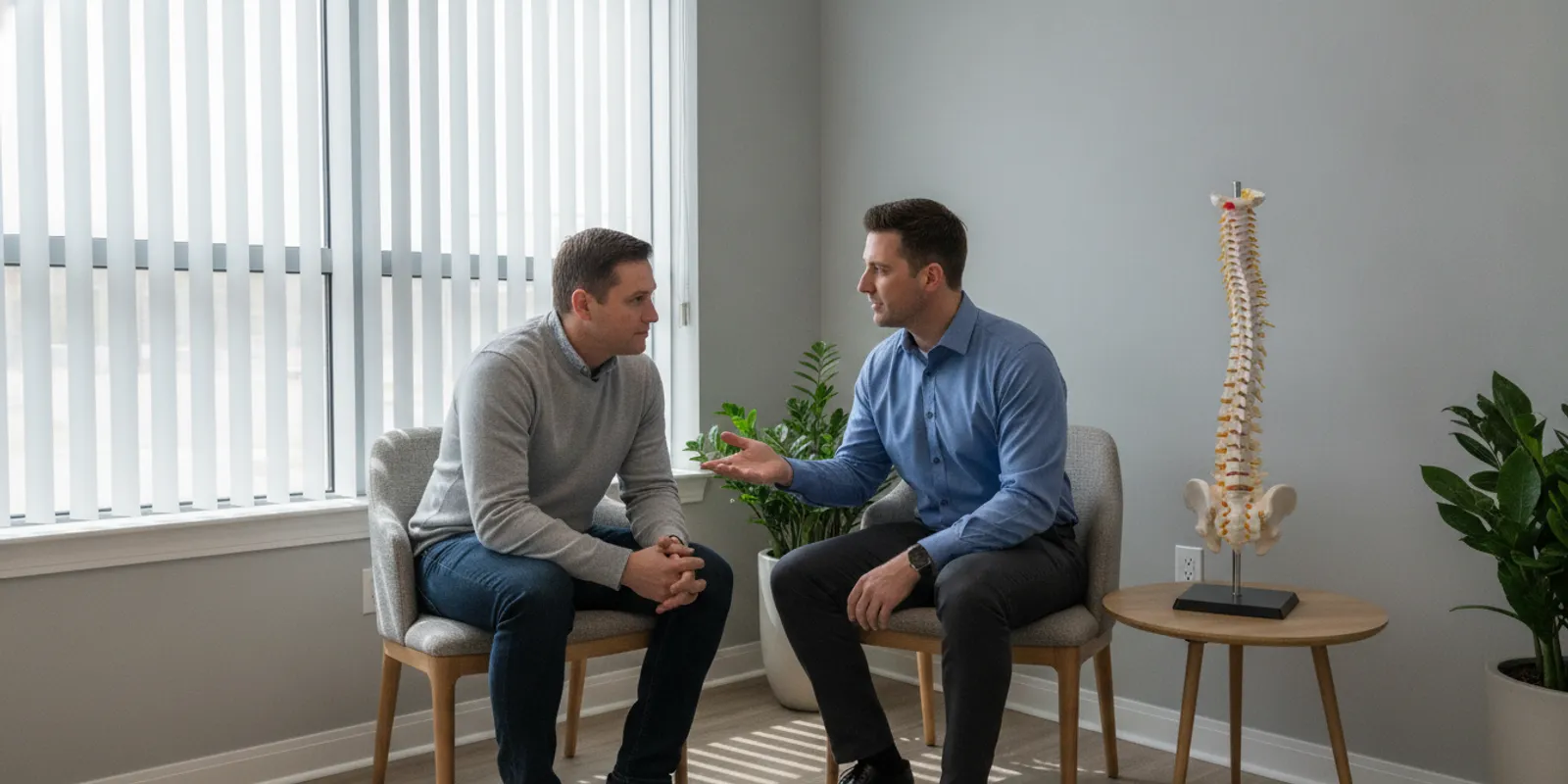
Scoliosis refers to a sideways curve of the spine. A curve measurement or a visual impression by itself does not explain how a person feels, what activities are difficult, or what care may be appropriate. People can have different histories and priorities, even when they use the same condition name. An evaluation should start with your own experience, not an assumption that a standard exercise list or treatment plan applies to everyone.
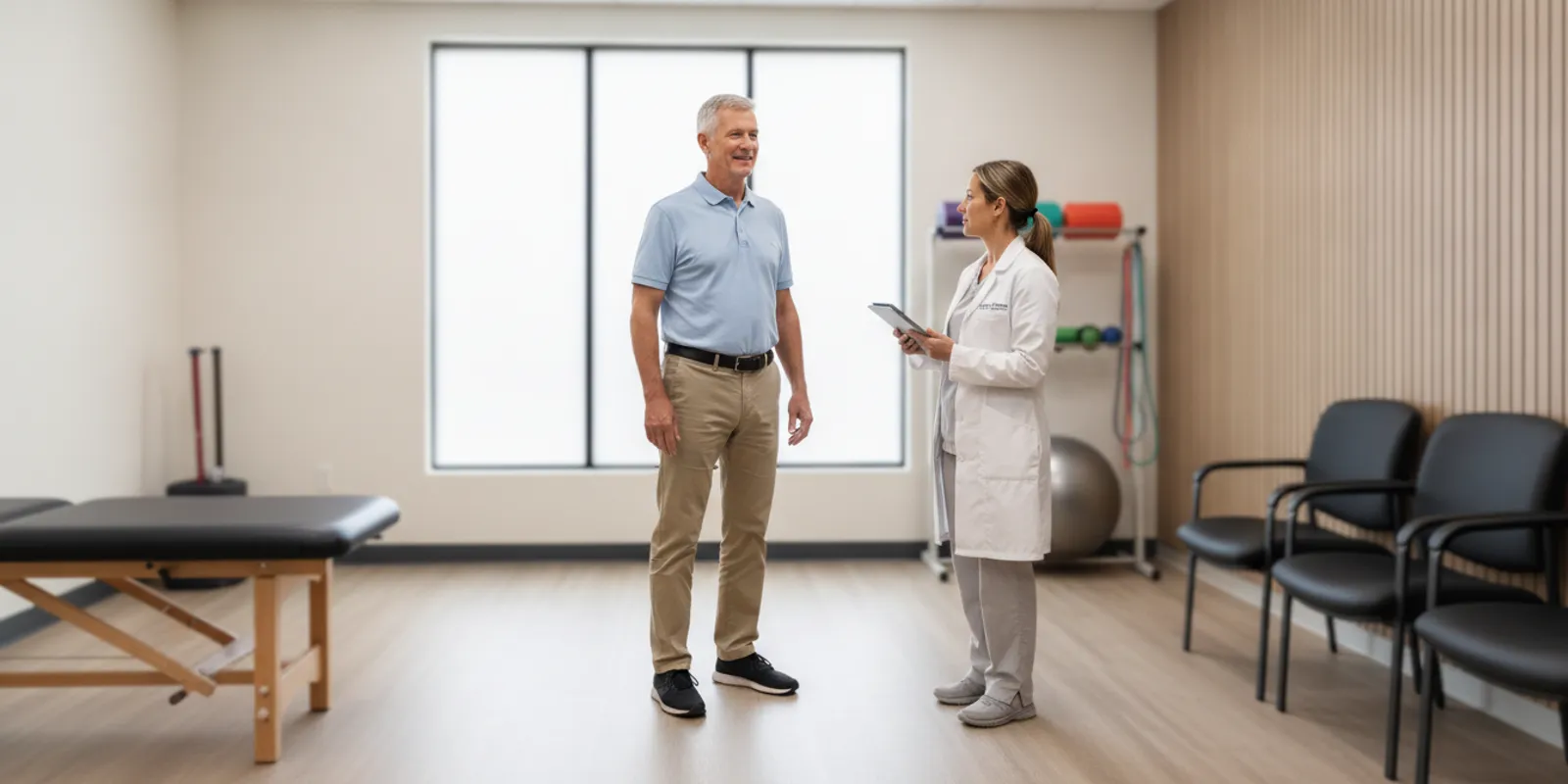
A clinician may ask about your current concerns, past diagnoses, prior care, other health conditions, and what you hope to do more comfortably. If rehabilitation is part of the discussion, questions may cover movement, strength, balance, flexibility, tolerance for activity, and how daily tasks are affected. The exact conversation depends on the clinician's role and your circumstances. You can ask why a question or movement assessment is being considered and decline or pause an activity that feels unsafe.
Think of the appointment as a chance to clarify the decision in front of you: Is rehabilitation suitable to consider now? Is further assessment needed first? What would the plan be intended to address? What changes would lead to a review? These are more useful questions than asking for a guaranteed correction or a timeline before your situation has been assessed.
Which changes in daily function should you describe?
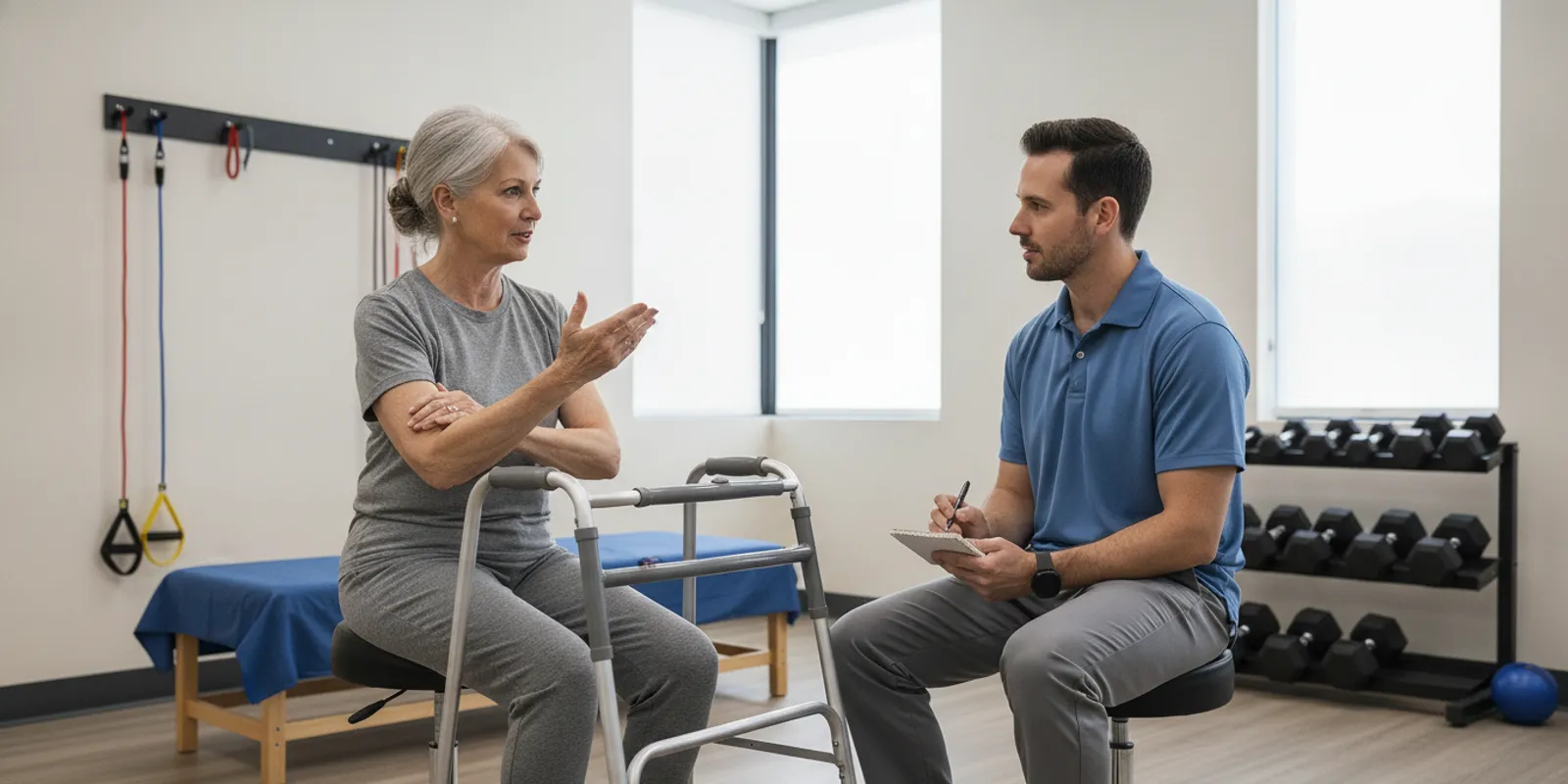
Specific examples make it easier to discuss what matters. Instead of saying only “my back feels different,” note the activity, when the problem appears, and what you do as a result. You do not need a perfect record or medical vocabulary. Ordinary details can help organize the conversation.
- Walking and standing: Do you change pace, take breaks, lean on a surface, or find it harder to remain standing during a meal or errand?
- Getting dressed: Are bending, reaching, putting on shoes, or turning to manage clothing more difficult than before?
- Household tasks: Do cooking, carrying groceries, cleaning, gardening, or making a bed require more breaks or a different approach?
- Work and hobbies: Does sitting at a desk, playing music, exercising, or spending time with family feel less manageable?
- Sleep and position changes: Is it harder to settle comfortably, turn in bed, or move between sitting and standing?
- Confidence and safety: Have you changed an activity because you feel unsteady, worried about a movement, or unsure how much is reasonable?
Include what you can still do as well as what has become difficult. For example, “I can walk to the mailbox, but I rest before returning,” gives a clearer picture than “walking is impossible.” Similarly, “I can reach a high shelf if I turn my whole body, but twisting feels uncomfortable” describes both capacity and a limitation. Avoid pushing through a movement to prove a point during the appointment; describing the experience is enough.
If your ability varies by time of day or from one day to another, explain that pattern. You might notice that a task feels manageable in the morning but harder after several errands, or that a long period of sitting changes how you move afterward. Those observations do not establish a cause. They give a clinician context for asking follow-up questions and considering what evaluation is appropriate.
What symptom and medical history is useful to bring?
Make a short timeline if it helps you remember. Include when you first noticed the concern, what has changed, and whether the change was gradual or followed a particular event. Note any prior scoliosis diagnosis or assessment, treatment you have tried, and what you noticed afterward. A response to something you tried in the past does not prove what will help now, but it is relevant history to share.
Bring records or imaging reports you already have if they are convenient. Do not assume you need a new scan before an appointment or try to interpret an image on your own. Ask the clinician whether existing information is useful and whether additional assessment is appropriate. An imaging result is only one part of the discussion; it needs to be considered in the context of your symptoms, examination, and health history.
It can also help to list medications, previous surgeries, recent injuries, and other health conditions. Mention any major change in balance, walking, sensation, or strength. If you are uncertain whether a detail matters, say so and let the clinician decide whether to ask more. For a general starting point on musculoskeletal health information, you can visit the National Institute of Arthritis and Musculoskeletal and Skin Diseases; use an appointment with a qualified professional for advice about your own symptoms.
Beforehand, choose two or three priorities rather than trying to cover every concern at once. A compact note might say: “Standing to prepare dinner is difficult after ten minutes; I take a break; I want to understand whether there is a safe way to keep doing it.” The purpose is not to diagnose yourself. It is to make the appointment specific and useful.
What might a rehabilitation discussion include?
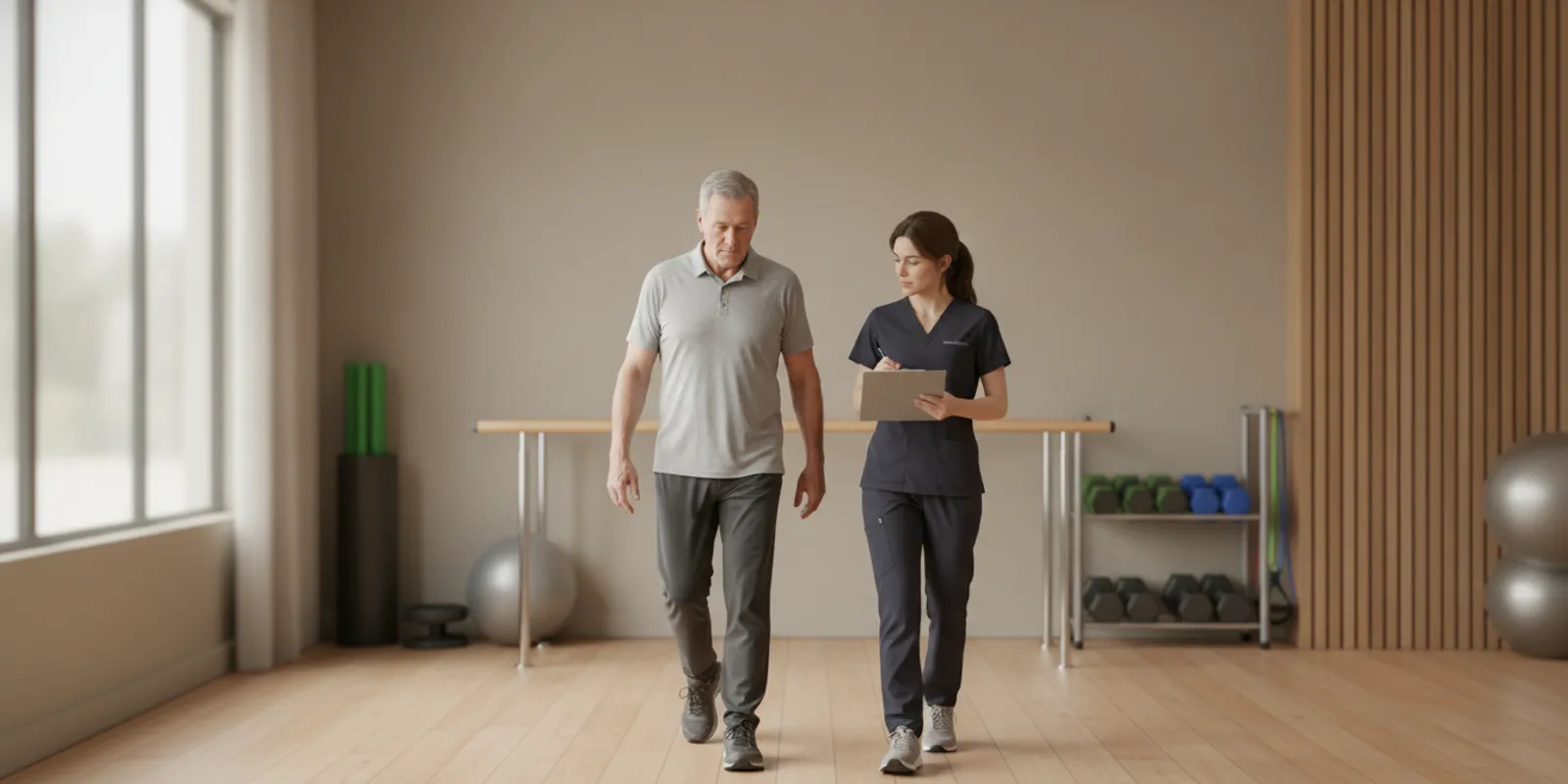
Depending on the evaluation and the clinician's scope, a discussion may consider how you move through selected tasks, your comfort with different positions, and your balance, strength, or flexibility. A clinician may ask you to demonstrate an activity or try a movement. Ask what the activity is meant to clarify, and tell the clinician if it increases discomfort, brings on a concerning symptom, or feels unsafe. You should not be pressured to perform a test you do not understand.
If rehabilitation is considered appropriate, possible discussion topics may include ways to approach a daily task, adapting an activity, or whether an individualized movement or exercise plan merits consideration. Those are examples of subjects to discuss, not a prescription. Do not adopt a program found online simply because it is labeled for scoliosis. A plan should be based on your own evaluation, preferences, abilities, and any relevant medical guidance.
Ask how the clinician would monitor whether a plan remains suitable. Progress does not have to mean a change in the spinal curve. It could be discussed in terms of a clearly defined activity or another goal agreed with your clinician. Ask what to do if a movement feels worse, how to modify or stop an activity, and when to check back. If the proposed approach does not fit your needs, ask what alternatives or referrals may be appropriate.
Sigma Core Medical Center's services page describes the center's stated service areas. Its about page offers additional practice information. Neither a general service listing nor this article establishes that a particular scoliosis service is available or suitable. Confirm the current service, provider, and scope directly before making a decision.
How can you compare possible next steps?
The right next step depends on your concerns and what an evaluation indicates. This table is a question guide, not a ranking of treatments or a recommendation. It can help you clarify the purpose, limits, and follow-up for different discussion paths.
| Discussion path | What it may help clarify | Question to ask |
|---|---|---|
| Rehabilitation evaluation | How movement or everyday activities relate to the concern | What parts of my function would you assess, and why? |
| Medical assessment | Whether symptoms or history call for further evaluation | Is there anything in my history that should be assessed before rehabilitation? |
| Activity discussion | Whether a task can be approached or adapted differently | What should I do if this activity increases discomfort? |
| Follow-up or referral | How changing concerns will be reviewed and who should address them | When should I check back, and what would prompt another assessment? |
| Continue current routine while seeking advice | What activities are presently manageable pending individualized guidance | Are there specific changes that mean I should stop and contact a clinician? |
For example, imagine that your main concern is fatigue during grocery shopping, not a constant limitation at home. The discussion could focus on how long you walk, whether carrying bags changes the experience, where you pause, and what you would like to manage. A second person might be primarily concerned about getting out of a low chair. Their evaluation questions and practical goals may be different. Neither example points to a diagnosis or a particular exercise; each shows why a concrete activity helps guide a conversation.
Another useful distinction is whether you want to understand a new symptom, maintain an activity, or review a change in an existing diagnosis. State which question matters most right now. If you have several priorities, ask the clinician which ones can be addressed in the appointment and which may need a separate assessment. A clear scope helps avoid leaving with a long list of vague recommendations.
How can you set practical goals without assuming an outcome?
A goal is most useful when it describes something you can observe in daily life. “Improve my posture” may be hard to evaluate unless you explain what that means to you. “Stand long enough to prepare a simple meal,” “walk through the local store with fewer pauses,” or “get dressed without needing help” gives the conversation a concrete starting point. A clinician can help decide whether a goal is appropriate and how it might be reviewed.
You can make an activity goal clearer by noting the setting and the support you use. For example, distinguish walking on a level indoor surface from walking outdoors over uneven ground, or note whether you use a railing on stairs. If the goal is gardening, specify whether the difficult part is kneeling, reaching, carrying tools, or staying in one position. This level of detail helps the clinician understand the task without suggesting that any one movement is the source of a spinal concern.
It may also help to record a brief baseline before your appointment. Write down what you attempted, how long you did it, whether you needed a pause, and what happened afterward. Keep the notes simple and avoid repeatedly testing a movement that causes discomfort. The point is to describe your usual experience, not to create a score or judge yourself. Bring a few representative examples rather than a long diary if that is easier to manage.
Make the goal realistic to your current routine and describe any support you already use. If you use a rail, cane, chair, or rest break, mention it without embarrassment. It helps show what is working and where you would like more confidence or ease. A goal can also be to understand your options, know which changes need prompt attention, or learn whether rehabilitation is a reasonable consideration. Not every useful appointment needs to end with an exercise plan.
Ask how progress would be discussed and what would count as a reason to revise the plan. You might ask whether the same daily task will be revisited later, whether you should keep a simple activity note, or whether a follow-up depends on a particular change. Avoid judging progress only by how you feel on one unusually easy or difficult day. Share the pattern and let your clinician help interpret it.
What questions should you ask before agreeing to a plan?
You have a right to understand what is being proposed and why. You can ask for plain-language explanations and take time to consider your choices. Useful questions include:
- What do you think is the main issue to address in my situation?
- What did you learn from my history or evaluation, and what remains uncertain?
- What would rehabilitation be intended to help me work on?
- How would a proposed activity relate to the daily goal I described?
- Are there movements or symptoms that should lead me to stop and contact you?
- How should the plan account for my other health conditions, medications, or previous injuries?
- How will we decide whether the plan remains appropriate?
- Would another clinician or additional assessment be useful before proceeding?
- What alternatives should I consider if this approach is not the right fit?
- What costs, visit expectations, or follow-up steps should I understand before I decide?
Write down the answers or request a brief summary if that would help. If an explanation uses unfamiliar terms, ask the provider to explain them. If a recommendation does not match your goals or comfort level, say so. Shared decision-making means that your preferences and concerns belong in the conversation; it does not require you to agree to a plan you do not understand.
When should a change receive prompt medical attention?
A routine rehabilitation discussion is not a substitute for prompt assessment of a new or rapidly worsening problem. Contact a qualified medical professional promptly about a sudden major change in strength, new or worsening numbness, a substantial change in balance or walking, or changes in bladder or bowel control. Seek emergency help for symptoms that feel life-threatening or require immediate care. These examples are not a complete list, and an online article cannot determine the cause or urgency of an individual symptom.
If a symptom is concerning but not clearly an emergency, explain when it began, how it has changed, and what else is happening when you call for guidance. Do not wait for a planned rehabilitation visit if you believe a new problem needs medical attention. When in doubt about urgency, contact an appropriate medical service for advice rather than trying to manage a serious change by exercising through it.
How can you prepare for the appointment?
A little preparation can make the time more focused. Before the visit, write a short timeline, select your two or three priority concerns, and choose one or two daily activities that show what you want to maintain or do more comfortably. Bring relevant records and a current medication list if available. If you have prior imaging reports, bring what you already have; do not arrange new tests solely because you read that someone else had them.
Wear clothing that lets you move comfortably if the clinician expects to discuss or observe movement. You do not need to practice a painful movement or change your routine beforehand. Consider bringing a family member or support person if you want help remembering details, while keeping your own preferences at the center of the discussion.
During the appointment, be honest about both limits and abilities. Mention concerns about falling, fatigue, pain, or uncertainty, even if they seem unrelated at first. Tell the clinician if an activity feels unsafe. At the end, repeat the next steps in your own words: what the plan is intended to address, what you should watch for, and whom to contact with questions. This simple check can reveal misunderstandings before you leave.
How can you decide whether to contact the center?
A conversation with a practice can help you find out whether its current services match the question you want answered. Sigma Core Medical Center describes itself as a Richmond-area integrative medical center. Its pain and function information and neuropathy information address other areas of care; they should not be taken as evidence that scoliosis-specific care is offered. Ask directly about current availability, the type of evaluation, and the appropriate provider before scheduling.
If your concern includes another condition, such as pelvic floor or incontinence symptoms, you can review the center's pelvic floor and incontinence information separately and ask which service is relevant. Keep each question specific so you do not assume that one service addresses a different concern. The center's main site provides a starting point for contacting the practice; confirm the current appointment process and whether a suitable evaluation is available.
Contact the center with your evaluation questions
Frequently asked questions
Can rehabilitation correct scoliosis?
This article cannot predict or promise a change in spinal curvature. Ask a qualified clinician what a suggested approach is intended to address, how it relates to your own evaluation, and what outcomes would be reviewed. A treatment discussion should not be framed as a guaranteed correction.
Should I bring imaging to an evaluation?
If you already have relevant images or reports, bringing them may provide context. Ask the clinician whether they are useful and whether additional assessment is appropriate. Do not arrange new imaging or try to interpret a scan on your own based only on this article.
What if my main goal is staying active?
Name the activity and describe the specific barrier, such as taking breaks during a walk or needing extra support when standing. Include what remains manageable. That gives the clinician a practical basis for discussing whether an evaluation or another care option fits your needs.
Does everyone with scoliosis need rehabilitation?
No single care path applies to everyone. Whether rehabilitation is worth discussing depends on your health history, concerns, goals, and an individualized evaluation. A clinician can also help determine whether another kind of assessment is more appropriate.
What if I do not know what is causing a change?
You do not need to arrive with a theory. Describe what you noticed, when it started, what makes it easier or harder, and how it affects daily activities. A qualified clinician can decide what follow-up questions or assessment may be needed.
Use the conversation to clarify what is known, what remains uncertain, and which next step fits your individual goals. A careful evaluation can help you make an informed decision without assuming that one approach is right for every person with scoliosis.