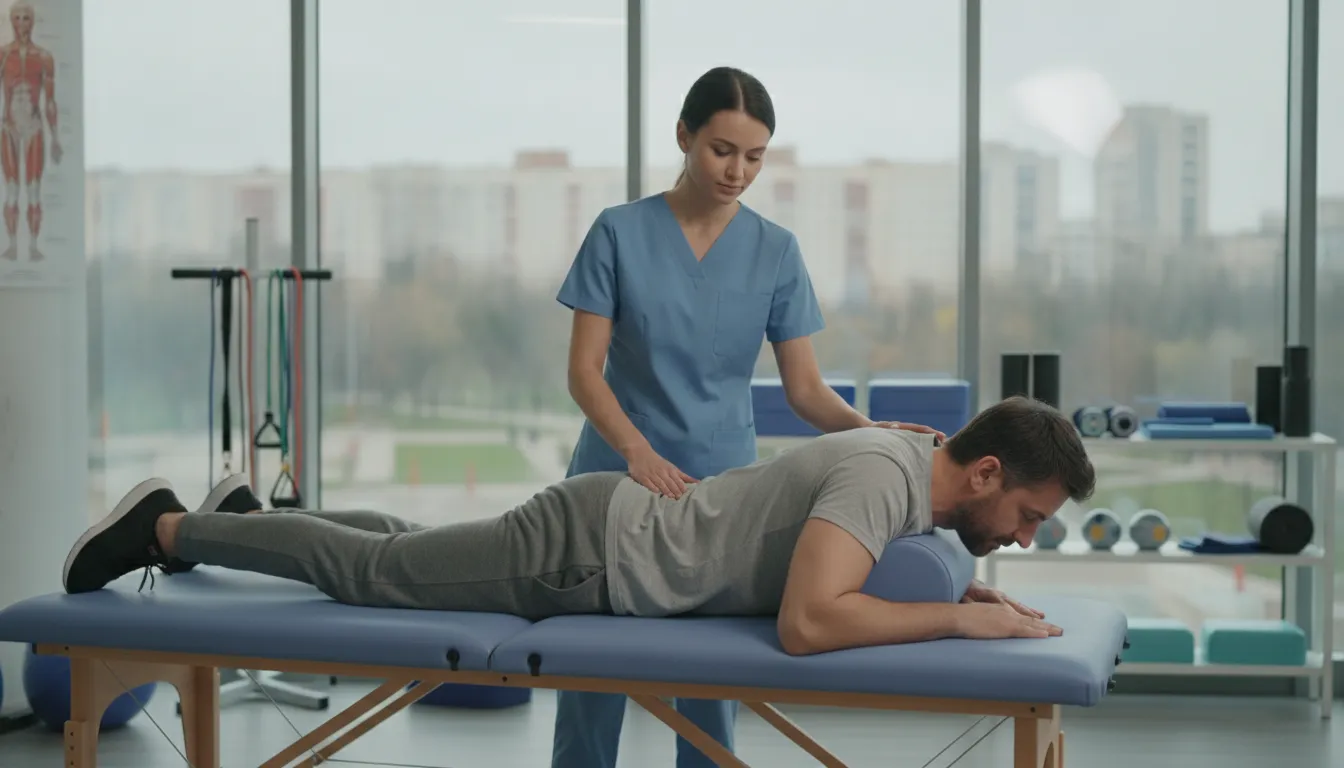
Costochondritis Treatment: A Step-by-Step Recovery Guide

Living with ongoing chest pain can make you cautious about movement. You may stop exercising, avoid lifting, or brace your body without realizing it. Over time, that pattern can create stiffness and make a return to normal activity harder. Costochondritis often responds to rest from aggravating tasks, gentle mobility, appropriate pain relief, and gradual rehabilitation. However, the first step is confirming that the pain is coming from the chest wall. This is particularly important for adults over 50 and anyone with heart or lung risk factors. Learn what costochondritis treatment may involve and when persistent symptoms need further evaluation.
Key Takeaways
- Do not self-diagnose chest pain: Costochondritis may cause localized tenderness, but new, severe, worsening, or unexplained pain requires prompt medical evaluation, especially after age 50 or with heart disease risk factors.
- Reduce irritation while staying gently active: Pause painful lifting, pushing, pulling, and overhead tasks. Use comfortable movement, supportive positioning, ice or heat, and gradual activity increases as symptoms improve.
- Seek personalized care for ongoing symptoms: Persistent, recurring, or activity-limiting pain may require a diagnosis review, medication safety check, guided rehabilitation, or specialist treatment.
What Is Costochondritis, and What Are Its Symptoms?
Costochondritis is inflammation in the cartilage that connects the upper ribs to the sternum, or breastbone. It is a common cause of chest wall pain, but chest discomfort should not be self-diagnosed. Heart, lung, digestive, and other musculoskeletal conditions can produce similar symptoms.
This distinction is especially important for adults over 50 and anyone with cardiovascular risk factors. New, severe, unexplained, or worsening chest pain requires urgent medical attention. Do not assume that pain is costochondritis simply because it changes with movement or feels tender when you press on it.
A clinician will usually begin with a detailed history and physical examination. They may ask when the pain started, what triggers it, whether it occurs during exertion, and whether you have symptoms such as shortness of breath, sweating, nausea, or palpitations. This overview of costochondritis diagnosis and treatment explains how healthcare professionals assess chest wall pain and distinguish it from more serious conditions.
Inflammation at the Costosternal Joint
Costochondritis affects the area where the ribs meet the sternum. These connections, called costosternal joints, contain flexible cartilage that allows the chest to expand as you breathe. When the tissue becomes irritated, it can cause pain at the front of the chest, often near one or more ribs.
The discomfort may occur on the left side, right side, or both sides of the breastbone. Some people develop symptoms after a respiratory illness, repeated coughing, strenuous lifting, or an activity that places extra stress on the chest wall. In other cases, there is no obvious trigger.
Costochondritis may also be called chest wall pain, costosternal syndrome, or costosternal chondrodynia. Although inflammation is involved, the area does not always look swollen or red. Persistent or unusual symptoms still deserve a medical assessment.
Sharp, Aching Pain and Local Tenderness
Costochondritis pain may feel sharp, aching, burning, or pressure-like. It is often concentrated near the breastbone, although it can spread across part of the chest or toward the back. Symptoms may be mild, or they may interfere with sleep, exercise, dressing, and other everyday activities.
Tenderness over one or more costosternal joints is common. A clinician may be able to reproduce your pain by pressing on the affected area. You might also notice discomfort from a seat belt, carrying a bag, reaching across your body, or lying in a particular position.
Tenderness can support a chest wall diagnosis, but it does not confirm one. Heart and lung conditions may sometimes occur with chest wall tenderness. For this reason, discuss new or concerning symptoms with a healthcare professional, as recommended in the Cleveland Clinic’s guidance on costochondritis.
Pain With Movement, Coughing, Sneezing, or Deep Breathing
Chest wall pain often becomes more noticeable when the ribs and surrounding muscles move. Turning your upper body, reaching overhead, pushing, pulling, or exercising may increase discomfort. Taking a deep breath can stretch the irritated cartilage and make the pain feel sharper.
Coughing and sneezing may be particularly painful because they create a sudden contraction through the chest and abdominal muscles. Repeated coughing can continue to irritate the area, which may explain why symptoms linger after a cold or respiratory infection has improved.
Pain that changes with position, breathing, or touch often points toward a musculoskeletal cause. However, these features do not automatically rule out a serious condition. The American Academy of Family Physicians explains that costochondritis may worsen with deep breathing, exertion, coughing, or upper-body movement.
Costochondritis vs. Tietze Syndrome
Costochondritis and Tietze syndrome can both cause pain near the joints where the ribs meet the sternum, but they are different conditions. Costochondritis is more common and often affects several rib joints. It typically causes tenderness without visible swelling.
Tietze syndrome is less common and usually affects one joint, often near the second or third rib. It may cause noticeable swelling over the painful area. The swelling can be tender and may become easier to see when you compare one side of the chest with the other.
Because both conditions can cause pain with movement, breathing, or pressure, an examination is the best way to distinguish them. Your clinician may also consider recent activities, respiratory symptoms, injuries, and your medical history.
Contact a healthcare professional promptly if you notice new swelling, redness, warmth, fever, a lump, or rapidly worsening pain. These symptoms may point to another cause that needs different care.
Why Tenderness Alone Cannot Confirm the Diagnosis
Pain reproduced by pressing on the chest makes a chest wall cause more likely, but it does not completely exclude heart disease. Symptoms can overlap, and serious conditions do not always follow a typical pattern.
Your clinician may ask whether the pain began suddenly or gradually, whether it occurs with exertion, and what makes it better or worse. They may also ask about sweating, nausea, palpitations, shortness of breath, dizziness, and fainting. Your blood pressure, cholesterol, diabetes, smoking history, previous heart problems, and family history may also affect the evaluation.
Depending on your symptoms and risk factors, testing may include an electrocardiogram, blood tests, a chest X-ray, or other imaging. The American Heart Association’s warning signs of a heart attack include chest pressure or discomfort with symptoms such as shortness of breath, sweating, nausea, or pain that spreads to the arm, jaw, back, or neck. Once urgent causes have been considered, your clinician can recommend an appropriate plan for suspected costochondritis.
How Do Doctors Diagnose Costochondritis, and What Causes It?
Doctors usually diagnose costochondritis by combining your symptom history with a physical examination. There is no single blood test or scan that confirms the condition. Instead, your clinician looks for pain and tenderness near the joints where the ribs connect to the breastbone, then considers whether another condition could be causing your chest symptoms.
A careful evaluation matters because chest pain can involve the heart, lungs, digestive system, muscles, nerves, or joints. This is especially important for adults over 50 and people with cardiovascular risk factors. Pain that your clinician can reproduce by pressing on the chest supports a chest wall diagnosis, but it does not completely exclude heart disease, as noted in the American Academy of Family Physicians’ guidance on costochondritis.
Common Triggers: Coughing, Infection, Injury, and Heavy Lifting
Costochondritis may develop after repeated stress on the chest wall. Severe or frequent coughing can strain the muscles and connective tissues around the ribs. Vomiting, a respiratory infection, or lingering irritation after an illness may also contribute to pain in the rib-sternum joints.
Other possible triggers include a direct blow to the chest, heavy lifting, intense exercise, or a sudden increase in physical activity. Physically demanding work may have the same effect, particularly when it involves repeated pushing, pulling, or carrying. The Cleveland Clinic’s overview of costochondritis lists chest injuries, coughing, infections, intense exercise, and heavy lifting among possible triggers.
Repetitive Strain and Poor Movement Mechanics
Repetitive upper-body movements can place stress on the ribs, breastbone, shoulders, and mid-back. Common examples include weight training, gardening, swimming, rowing, manual work, and frequent overhead reaching. Pain may be more likely when you increase the intensity, duration, or frequency of an activity too quickly.
Movement patterns may also affect how force travels through the chest wall. Rounded shoulders, limited mid-back mobility, or shallow breathing can make some activities feel more demanding. These factors do not prove that posture caused your symptoms, but they may help explain recurring flares. A clinician can assess your movement and recommend safer ways to work, exercise, and recover. Medical News Today describes repetitive movement and severe coughing as possible causes.
Inflammatory Conditions and Other Risk Factors
In many cases, doctors cannot identify one specific cause. This is called idiopathic costochondritis. The condition may also occur alongside inflammatory or musculoskeletal conditions, including rheumatoid arthritis, fibromyalgia, or problems affecting the joints in the back.
Your medical history can help identify these connections. Tell your clinician about recent illnesses, injuries, changes in exercise, physically demanding tasks, persistent coughing, and known autoimmune or inflammatory conditions. Also describe whether the pain began suddenly or gradually and whether it changes with breathing, movement, or pressure.
Your clinician may also consider other chest wall conditions. Tietze syndrome, for example, often causes visible swelling and usually affects one upper rib joint. The Cleveland Clinic explains the differences between costochondritis and Tietze syndrome.
Review Your Medical History and Chest Wall Exam
During an appointment, your clinician will ask where the pain is located, what it feels like, when it began, and what makes it better or worse. They may also ask about shortness of breath, dizziness, nausea, sweating, palpitations, fever, cough, and your personal and family history of heart or lung disease.
The physical examination may include gentle pressure along the front, sides, and back of your chest. Reproducing your familiar pain in a specific area can support a chest wall diagnosis. Your clinician may also check your breathing, heart rate, blood pressure, lung sounds, posture, shoulder movement, and upper-back mobility.
Tenderness provides useful information, but it cannot confirm costochondritis by itself. The AAFP review of costochondritis diagnosis explains that pain reproduced by touch does not fully exclude a heart-related cause.
Rule Out Heart, Lung, Digestive, and Musculoskeletal Causes
Costochondritis is diagnosed after a clinician considers other possible explanations for your pain. Heart-related symptoms may feel like pressure, burning, aching, or tightness rather than sharp pain. Lung conditions, including infection or a blood clot, may cause pain that worsens with breathing. Reflux and esophageal spasm can also cause discomfort in the chest.
Other possibilities include a strained chest muscle, rib injury, nerve irritation, arthritis in the spine, or inflammation around the lungs. Your clinician will consider your symptoms, examination findings, age, health history, and risk factors when deciding whether additional evaluation is needed.
Get urgent medical care for new or unexplained chest pain, especially if it occurs with shortness of breath, fainting, sweating, nausea, unusual weakness, or pain spreading to the arm, jaw, back, or neck. Do not assume that tenderness makes a serious heart or lung condition impossible.
Know When You May Need an ECG, Blood Tests, X-Ray, or Other Imaging
Testing depends on your symptoms and personal risk factors. An electrocardiogram, or ECG, records the heart’s electrical activity and may be appropriate when a heart-related cause is possible. Blood tests can help identify heart muscle injury, infection, inflammation, or other medical problems.
A chest X-ray may help detect pneumonia, a rib injury, or another lung or chest condition, although it generally does not show costochondritis itself. Depending on your examination, a clinician may recommend an echocardiogram, CT scan, stress test, or other imaging.
Adults over 35, people with risk factors for coronary artery disease, and anyone with heart or lung symptoms may need an ECG and possibly a chest X-ray, according to the AAFP’s diagnostic recommendations. Your healthcare professional should decide which tests are appropriate, rather than relying on self-diagnosis for chest pain.
When Does Chest Pain Require Urgent Medical Care?
Costochondritis can cause sharp, localized chest pain that worsens with movement, coughing, sneezing, or deep breathing. Still, chest pain can also come from the heart, lungs, digestive system, blood vessels, or other structures. Because several serious conditions may initially resemble chest wall pain, do not assume costochondritis is the cause without an appropriate evaluation.
Call emergency services for new, severe, or unexplained chest pain, especially when it occurs with trouble breathing, fainting, unusual sweating, nausea, weakness, or discomfort that spreads beyond the chest. Do not drive yourself if you feel unwell. If symptoms are mild but persistent, arrange prompt medical care instead of waiting for them to disappear. The American Academy of Family Physicians explains when people with chest pain may need an ECG and additional testing.
Pressure or Pain That Spreads to the Arm, Jaw, Back, or Neck
Chest discomfort that feels like pressure, squeezing, heaviness, or tightness requires immediate attention. Concern increases when the discomfort spreads to one or both arms, the shoulder, jaw, neck, upper back, or the area between the shoulder blades. These patterns may occur during a heart-related emergency, even when the original chest pain seems mild.
Do not wait for the pain to become severe, and do not assume it must affect the left side. Women and older adults may have less typical symptoms, including unusual fatigue, indigestion, shortness of breath, or discomfort in the back or jaw. Medical News Today identifies pain radiating to the arm, neck, jaw, or back as a reason to seek immediate care.
Shortness of Breath, Fainting, Sweating, Nausea, or Palpitations
Chest pain combined with shortness of breath, fainting, lightheadedness, cold sweating, nausea, or a racing, pounding, or irregular heartbeat needs urgent evaluation. These symptoms may involve the heart, lungs, or circulation, and chest wall tenderness cannot safely explain them on its own.
If you feel faint, sit or lie down while someone calls emergency services. Avoid walking around, exercising, or taking another person’s prescription medication. Keep your medication list and information about your medical conditions available for responders. The Chartered Society of Physiotherapy lists breathing trouble, nausea, sweating, and arm pain among symptoms requiring immediate medical help.
Sudden, Severe, Worsening, or Unexplained Pain
Seek urgent care if chest pain begins suddenly, feels intense, continues to worsen, or does not improve with rest. Pain without an obvious trigger also deserves attention, particularly when it feels different from previous episodes or makes it difficult to breathe, move, or speak comfortably.
A previous diagnosis of costochondritis does not mean every future episode has the same cause. A new pattern may require another physical examination, ECG, blood tests, or imaging. Medical News Today recommends immediate care when chest pain worsens or does not improve with treatment. Avoid increasing pain medication on your own while waiting for an evaluation.
Fever, Coughing Up Blood, Blue Lips, or Infection Symptoms
Chest pain with fever, chills, a persistent cough, worsening mucus, or a strong feeling of illness may point to an infection or inflammation involving the lungs or nearby tissues. Coughing up blood, including a small amount, requires prompt medical attention. Blue or gray lips, confusion, or severe breathing difficulty are emergency symptoms.
Call emergency services if you are struggling to breathe, becoming unusually drowsy, or noticing blue coloring around your lips or fingertips. Do not treat these symptoms as a simple muscle strain. Medical News Today includes coughing up blood or dark sputum among the warning signs that require immediate care.
New Chest Pain After Age 50 or With Cardiovascular Risk Factors
New chest pain after age 50 deserves careful medical assessment, especially if you have high blood pressure, diabetes, high cholesterol, smoke, have obesity or kidney disease, or have a personal or family history of heart disease. Older adults may have subtle symptoms that do not match the familiar description of a heart attack.
Arrange urgent care rather than using chest tenderness as reassurance. A clinician may review your history, examine your heart and lungs, perform an ECG, and decide whether blood tests or imaging are appropriate. The AAFP recommends further evaluation for people with coronary artery disease risk or cardiopulmonary symptoms.
Why Tenderness Does Not Rule Out an Emergency
Pain that increases when you press on a rib joint can support a diagnosis of costochondritis, but it does not completely exclude heart disease or another serious condition. More than one problem can occur at the same time, and chest wall tenderness may draw attention away from symptoms such as breathlessness, sweating, weakness, or radiating discomfort.
Use tenderness as one clinical detail, not as a safety test. If chest pain is new, persistent, severe, or accompanied by other warning signs, seek medical care promptly. The AAFP notes that reproducible chest pain strongly suggests costochondritis but cannot fully rule out heart disease. After urgent causes have been excluded, your clinician can help identify the source of the pain and recommend appropriate treatment.
How Can You Treat Costochondritis at Home?
Home care can reduce discomfort while irritated rib cartilage and nearby muscles recover. The most helpful approach is usually a balance of protection and gentle activity. Reduce movements that clearly worsen your pain, but avoid staying in bed unless a clinician tells you to. Prolonged inactivity can leave your back, shoulders, and chest muscles stiff, making it harder to return to normal movement.
Use comfort measures such as ice, heat, supportive pillows, and relaxed breathing. Pay attention to how your body responds, and increase activity gradually as daily movements become easier. A symptom log can help you recognize patterns, especially if pain appears after lifting, coughing, prolonged sitting, or sleeping in a certain position.
Home treatment is appropriate only after a healthcare professional has considered other causes of chest pain. Seek urgent medical care for chest pressure, severe or worsening pain, shortness of breath, fainting, sweating, nausea, palpitations, or pain that spreads to your arm, jaw, back, or neck. The Cleveland Clinic’s costochondritis guidance also recommends medical evaluation for concerning or persistent symptoms.
Rest From Aggravating Activities Without Staying in Bed
For several days, reduce activities that increase your pain. Common examples include heavy lifting, pushing, pulling, overhead work, repetitive reaching, and strenuous exercise. You may also need to take more breaks after a respiratory illness or physically demanding task.
Resting does not require complete inactivity. Short, easy walks and gentle daily movement can help limit stiffness. Keep your breathing relaxed, move slowly, and stop before discomfort becomes sharp or progressively worse. If an activity causes a flare, give your body additional recovery time before trying it again.
Return to normal tasks in small steps. For example, carry lighter objects close to your body before resuming heavier lifting. If ordinary movements remain painful or your symptoms keep returning, ask a clinician for an individualized activity plan.
Use Ice for Recent Flares and Heat for Muscle Tension
Ice may help during a recent flare, particularly after overuse or a specific strain. Wrap an ice pack in a thin towel and apply it for 15 to 20 minutes. Never place ice directly on your skin, and allow the area to warm before applying it again. Stop if your skin becomes numb, pale, or painful.
Heat can be more soothing when the muscles around your chest, shoulders, or upper back feel tight. Try a warm compress or heating pad for 15 to 20 minutes, checking your skin regularly. Do not sleep with a heating pad, and avoid heat over areas with reduced sensation.
Neither option identifies the cause of chest pain. They are comfort measures that may help you move more easily while you recover. The American Academy of Family Physicians describes ice and heat as conservative treatment options for costochondritis.
Support Your Chest With a Pillow When Coughing, Sneezing, or Sleeping
Coughing and sneezing create a sudden force through the ribcage, which can increase tenderness. Hold a small pillow firmly but gently against the painful area before you cough or sneeze. The support should feel comfortable, not restrictive. Do not press so tightly that your breathing becomes limited.
A pillow can also make it easier to change positions in bed. Hold one against your chest when rolling, or place one beside your body to reduce the chance of turning onto the painful side. If coughing is frequent, speak with a healthcare professional about the cause, such as an infection, allergies, reflux, or another respiratory problem.
The Cleveland Clinic recommends using a pillow for chest support during coughing and sneezing. Seek care if coughing is accompanied by fever, shortness of breath, coughing up blood, or worsening chest pain.
Choose Comfortable Sleep Positions and Relaxed Breathing
Try sleeping on your back with a pillow under your knees, or on the less painful side with a pillow supporting your upper arm and chest. Avoid lying directly on the painful side if it increases tenderness. A pillow behind your back may also help you stay in a comfortable position without feeling confined.
When getting out of bed, roll onto your side first, then use your arms to help push yourself up. This can reduce a sudden pull through the chest. During the day, practice quiet breathing that allows your abdomen to move naturally. Do not force your ribs to expand as far as possible or hold your breath during movement.
You should still be able to breathe comfortably. If breathing becomes difficult, painful, unusually rapid, or different from your usual symptoms, seek prompt medical attention rather than continuing home treatment.
Avoid Chest Binding and Pressure on the Ribs
Wrapping or binding the chest may seem like a way to limit painful movement, but tight compression can restrict breathing and place more pressure on sensitive tissues. Avoid elastic bandages, restrictive shapewear, tight athletic clothing, and heavy bags that rest across the chest.
Choose loose clothing and adjust backpack straps so they do not press on tender areas. Wear a seatbelt correctly, but check that the strap is not rubbing directly over the most painful spot. Do not use compression as a substitute for evaluation or treatment.
For now, pause exercises that involve forceful chest contractions, deep stretching into pain, or repeated upper-body movements. Resume them gradually after everyday activities become more comfortable. Your care team can show you safer ways to position your body and modify tasks while symptoms settle.
Track Triggers, Pain Patterns, and Symptom Changes
A simple symptom log can show you what irritates your chest and whether your recovery is moving in the right direction. Record your pain level, the location of tenderness, recent activities, sleep position, coughing, illness, and how long discomfort lasts afterward.
Look for repeated patterns instead of focusing on one uncomfortable moment. Pain that appears after lifting, prolonged sitting, coughing, or sleeping on one side may point to a useful activity change. Note whether you can walk, dress, climb stairs, or take a comfortable breath more easily over time.
Gradual improvement in movement is encouraging, even if mild tenderness remains. Contact a healthcare professional if pain worsens, keeps returning, changes in character, or fails to improve. Identifying and avoiding recurring triggers is especially helpful during the early recovery period.
Which Costochondritis Medications Can Help?
Medication may ease costochondritis pain while the irritated chest wall heals, but it should support a broader recovery plan rather than replace a medical evaluation. Chest pain can have many causes, and costochondritis is usually diagnosed after a clinician reviews your symptoms, examines the painful area, and considers heart, lung, digestive, and musculoskeletal conditions.
The safest option depends on your medical history, current prescriptions, kidney function, blood pressure, and risk of stomach bleeding. Adults over 50 may also take several medications that affect which pain relievers are appropriate. If chest pain is new, severe, worsening, or accompanied by shortness of breath, sweating, fainting, nausea, or pain that spreads to your arm, jaw, back, or neck, seek urgent medical care instead of treating it at home.
Use Acetaminophen for Pain
Acetaminophen may help relieve mild to moderate costochondritis pain, especially when reducing inflammation is not the main goal or NSAIDs are not appropriate. It can make sleep, daily activities, and gentle movement more comfortable, but it does not reduce inflammation. The Cleveland Clinic’s costochondritis guidance lists over-the-counter pain relievers such as acetaminophen as an option for pain management.
Read the label carefully and check whether another medication you take also contains acetaminophen. Cold, flu, and prescription combination products commonly include it. Taking more than directed can damage the liver, particularly if you have liver disease or regularly drink alcohol. Ask your healthcare provider or pharmacist which dose is suitable for you.
Apply Topical NSAIDs to Localized Pain
A topical NSAID gel may help when costochondritis pain is concentrated in a small area along the breastbone or ribs. Applying the product to the skin over the painful region can provide a practical alternative to an oral medication. It may be especially useful for people who want localized relief during a short flare.
Topical NSAIDs still require caution. Follow the product instructions, apply it only to intact skin, and wash your hands after use. Do not assume a topical product is risk-free if you have kidney disease, stomach ulcers, heart disease, or high blood pressure, or if you take blood thinners. Medscape’s treatment guidance notes that topical NSAIDs may provide localized relief for some patients.
Take Oral NSAIDs for Short-Term Inflammation Relief
Ibuprofen and naproxen are oral nonsteroidal anti-inflammatory drugs, commonly called NSAIDs. They may reduce inflammation and pain during a short flare, including symptoms that follow heavy lifting, repeated coughing, or another chest wall strain. The Cleveland Clinic explains NSAID use as one possible approach to managing costochondritis discomfort.
Use the lowest effective amount for the shortest period stated on the label, unless your clinician gives you different instructions. Take the medication exactly as directed, and do not use it to push through painful lifting or exercise. If you need frequent doses, your symptoms may require reassessment, activity changes, or guided rehabilitation instead of longer self-treatment.
Check NSAID Safety With Ulcers, Kidney Disease, Hypertension, or Heart Disease
NSAIDs can irritate the stomach lining, affect kidney function, raise blood pressure, and increase cardiovascular risks for some people. Before taking ibuprofen or naproxen, speak with a healthcare professional if you have a history of stomach ulcers or bleeding, kidney disease, high blood pressure, heart disease, or stroke.
You should also ask before using an NSAID if you are dehydrated, preparing for surgery, or taking medication for blood pressure or fluid retention. The American Academy of Family Physicians’ recommendations advise contacting a healthcare provider before using pain medicine for more than 10 days in a row, especially when these conditions are present.
Review Medication Interactions, Especially With Blood Thinners
NSAIDs can interact with medicines that affect clotting, including anticoagulants and antiplatelet drugs such as warfarin, apixaban, rivaroxaban, clopidogrel, and aspirin. Taking these medications together may increase the risk of stomach or other bleeding. Some supplements can affect clotting as well, so include them in your medication review.
Before starting an over-the-counter pain reliever, give your clinician or pharmacist a complete list of prescriptions, supplements, and nonprescription products. The Cleveland Clinic’s NSAID safety information explains common risks, but your care team should guide the final choice. Report black stools, vomiting blood, unusual bruising, severe stomach pain, or sudden weakness promptly.
Avoid Combining NSAIDs and Read Over-the-Counter Labels
Do not take ibuprofen and naproxen together, and check combination products for hidden NSAIDs. Some cold, flu, headache, and menstrual pain products may contain an anti-inflammatory medication. Combining products does not necessarily provide better relief, but it can increase the risk of stomach bleeding, kidney problems, and other side effects.
Read the active ingredients, dose, warnings, and maximum daily amount on every label. Follow instructions about timing and whether to take the product with food. Medical News Today’s costochondritis guidance also advises against combining NSAIDs and recommends reviewing over-the-counter labels carefully. When uncertain, ask a pharmacist before taking another pain product.
Do Not Increase Medication Without Medical Guidance
More medication is not always more effective. Increasing a dose can create serious risks without addressing the reason your pain continues. If the recommended amount is not helping, do not take extra doses, use the medicine more often, or combine it with another product unless a healthcare professional tells you to do so.
Persistent or worsening pain deserves a fresh assessment, particularly if it affects breathing, sleep, walking, or normal arm movement. A clinician may review the diagnosis, check your medication list, and recommend rehabilitation exercises or another treatment. It is also wise to consult a healthcare provider before increasing medication.
How Should You Modify Activity During Recovery?
Recovering from costochondritis does not usually require complete bed rest. The goal is to reduce stress on the chest wall while keeping up comfortable movement. This approach can help limit stiffness and make it easier to return to your normal activities without repeatedly irritating the costosternal joints.
Start by identifying the movements that trigger your symptoms. You may notice pain when lifting a grandchild, reaching into a high cabinet, pushing a heavy door, driving, coughing, or exercising. The Cleveland Clinic recommends avoiding activities that increase pain and allowing time to recover after strenuous activity.
Your plan should reflect your age, fitness level, medical history, and the cause of your chest pain. If your pain is new, unexplained, severe, or changing, seek medical evaluation before assuming costochondritis is the cause. Once a clinician has ruled out urgent conditions, the following adjustments can help you stay active while your chest wall heals.
Temporarily Reduce Lifting, Pushing, Pulling, and Overhead Work
Heavy lifting and forceful upper-body movements can strain the muscles, joints, and cartilage around the ribs. Temporarily reduce activities such as moving furniture, carrying heavy bags, shoveling, rowing, weightlifting, and pushing a loaded shopping cart. Painting, reaching into high cupboards, and other overhead tasks may also worsen symptoms.
Ask for help with demanding chores, divide heavy loads into smaller amounts, and keep objects close to your body when lifting. When your symptoms settle, reintroduce these activities gradually rather than returning to your usual workload immediately. Resting the chest and ribcage is a key part of treatment, according to the Cleveland Clinic’s costochondritis guidance.
Avoid Movements That Cause Sharp or Worsening Pain
Pain provides useful information during recovery. Mild tightness or a gentle stretch may be acceptable, but sharp, stabbing, or steadily worsening pain means you should stop and change the movement. Do not try to push through chest pain during exercise, stretching, housework, or recreational activities.
Pay attention to what happens after you stop. If discomfort continues for hours or is worse the following morning, the activity may have been too intense or lasted too long. Reduce the range of motion, slow your pace, or choose an easier alternative. If your pain pattern changes or occurs with shortness of breath, dizziness, sweating, nausea, or palpitations, seek medical care promptly.
Stay Gently Active Instead of Completely Resting
Complete inactivity can cause stiffness, reduce conditioning, and make it harder to resume activities you enjoy. Unless your healthcare provider gives you different instructions, continue with gentle movement that does not increase your symptoms. Short walks, relaxed shoulder movements, and comfortable daily tasks may be reasonable starting points.
Keep your breathing relaxed, and do not force deep breaths if they reproduce sharp pain. Gentle chest and pectoral stretching, posture work, and thoracic mobility exercises may help some people with persistent symptoms. Medscape’s treatment overview discusses these options. Your clinician can help select exercises that match your pain level, mobility, and strength.
Improve Posture, Seating, Workstation, and Driving Ergonomics
Slouched sitting can keep your shoulders rounded and place prolonged tension on your chest, neck, and upper back. Choose a chair that supports your back, keep both feet on the floor, and position your screen so you do not need to lean forward. Let your shoulders rest naturally instead of pulling them forcefully backward.
Change positions regularly and take brief standing or walking breaks during longer periods of sitting. In the car, adjust the seat so you can reach the steering wheel without rounding your shoulders or locking your elbows. Avoid leaning on one arm for extended periods. Improving posture and correcting home, work, or driving ergonomics may reduce recurring strain.
Limit Repetitive Coughing and Upper-Body Strain
A persistent cough can repeatedly stress the muscles and cartilage around the ribs. When you need to cough or sneeze, gently brace your chest with a pillow or your hands. Do not tightly compress your ribcage. This support may reduce discomfort during sudden movements, as described in the Cleveland Clinic’s self-care recommendations.
A severe or persistent cough deserves medical attention, especially when it occurs with fever, wheezing, shortness of breath, or coughing up blood. An infection or lung condition may be contributing to your symptoms. Until your pain improves, limit repetitive upper-body tasks such as vigorous scrubbing, chopping, lifting, and frequent reaching.
Pace Activities and Return to Exercise Gradually
As your pain improves, increase activity in small steps. Begin with an amount you can complete comfortably, then gradually add time, repetitions, distance, or resistance. Avoid increasing several factors at once. For example, add a few minutes to a walk before introducing hills or carrying weights.
Allow enough recovery time between demanding activities, and check how you feel later that day and the next morning. If symptoms flare, return to the last comfortable level for several days before progressing again. A gradual return to exercise can help reduce setbacks. If you cannot resume normal activities or your pain persists despite these changes, ask your clinician to reassess your plan.
Which Gentle Exercises Can Support Recovery?
Gentle movement may reduce stiffness, improve posture, and ease muscle tension around the chest wall as costochondritis heals. The aim is not to stretch as far as possible or push through discomfort. Use slow, controlled movements, keep your breathing relaxed, and stay within a range that feels comfortable.
Start with one or two exercises once a day, unless your clinician recommends something different. A few easy repetitions are often more appropriate than a long workout, particularly during a painful flare. The Cleveland Clinic’s costochondritis guidance recommends listening to your body and stopping activities that worsen symptoms.
Do not exercise through new, severe, or unexplained chest pain. Seek urgent medical care if pain occurs with shortness of breath, sweating, nausea, fainting, or discomfort that spreads to your arm, jaw, back, or neck. Once serious causes have been ruled out, these gentle movements may help you return to daily activity gradually.
Practice Diaphragmatic Breathing Without Forced Chest Expansion
Diaphragmatic breathing encourages your abdomen to move as you breathe, rather than forcing your ribs and upper chest to expand. This may help you breathe more comfortably while reducing tension in the chest and shoulders.
Lie on your back with your knees bent, or sit in a supportive chair. Place one hand on your upper chest and the other on your abdomen. Breathe in slowly through your nose, allowing the hand on your abdomen to rise gently. Keep your shoulders relaxed and avoid taking an exaggerated breath. Exhale slowly through pursed lips.
Try five to 10 calm breaths. Stop if you feel dizzy, more short of breath, or develop sharp pain. The Cleveland Clinic describes diaphragmatic breathing as a way to support breathing without forcing painful chest expansion. The exercise should feel easy and calming, not strenuous.
Perform Gentle Thoracic Extensions With a Rolled Towel
A stiff upper back can affect posture and place extra demand on the muscles around the ribs and breastbone. Gentle thoracic extension may help you move your mid-back more comfortably without placing excessive strain on the front of the chest.
Roll a bath towel or large hand towel and place it horizontally beneath your upper back. Lie on the floor or a firm bed with your knees bent and feet supported. Support your head with your hands or a thin pillow. Allow your upper back to gently drape over the towel for one or two breaths, then return to a neutral position. Keep the movement small, and avoid arching your lower back or forcing your ribs upward.
Repeat three to five times. Gentle thoracic extensions are a common part of conservative care. Skip this exercise if lying down increases your pain or makes breathing uncomfortable.
Stretch Your Pectoral Muscles in a Doorway
Tight pectoral muscles can contribute to rounded shoulders and tension across the front of the chest. A doorway stretch may help improve shoulder positioning, but it should create only a mild pulling sensation, not pain at the breastbone or ribs.
Stand in a doorway with one forearm against the frame and your elbow bent at about 90 degrees. Keep your shoulder relaxed and your spine tall. Slowly lean or turn your body forward until you feel a gentle stretch across your chest and the front of your shoulder. Hold for 10 to 20 seconds while breathing normally, then return to the starting position.
Repeat once or twice on each side. To make the stretch easier, step closer to the frame or lower your arm. Do not bounce, hold your breath, or force a deep stretch. If the movement causes sharp pain, reduce the range or wait until your symptoms settle.
Practice Shoulder-Blade Squeezes and Wall Slides
Shoulder-blade exercises can support more comfortable posture without requiring weights or heavy resistance. They may also reduce the tendency to round forward when chest discomfort causes you to guard the painful area.
For shoulder-blade squeezes, sit or stand comfortably with your arms relaxed. Gently draw your shoulder blades back and slightly down, as if placing them into your back pockets. Hold for three to five seconds, then release fully. Repeat five to 10 times. Keep your neck relaxed, and do not shrug or thrust your chest forward.
For wall slides, stand near a wall if that position feels comfortable. Place your arms against the wall in a relaxed “W” position, then slowly slide them upward as far as you can without pain. Start with five repetitions. Medscape describes shoulder-blade squeezes and wall slides as exercises that may support posture and shoulder mobility.
Rotate and Mobilize Your Mid-Back Within Your Pain Limits
Gentle mid-back rotation can help maintain mobility if chest discomfort has caused you to move less. Keep the range small at first. The purpose is to preserve comfortable movement, not to achieve a deep twist.
Sit in a stable chair with your feet flat on the floor. Cross your arms over your chest only if that position feels comfortable. Slowly turn your shoulders a few inches to one side while keeping your hips facing forward. Return to center, then turn to the other side. Move with your breath, and do not pull yourself farther with your arms.
You can also lie on your side with your knees comfortably bent and slowly open your top arm toward the opposite side. Choose whichever position feels easier. Repeat three to five times per side. Keep the rotation gentle and within comfortable limits. Reduce the range or stop if pain continues after the exercise.
Stop at Sharp or Radiating Pain, Not Mild Stretching
A mild stretch or slight muscle awareness may be acceptable during a mobility exercise. Sharp, stabbing, burning, or radiating pain is different. These sensations may mean the movement is irritating the chest wall, nearby nerves, or another structure.
Use a simple pain check during and after each exercise. If discomfort stays mild and settles quickly when you stop, try fewer repetitions or a smaller range of motion next time. Stop if pain becomes sharper, spreads into your arm, back, or neck, affects your breathing, or continues to worsen after the exercise.
Also notice how you feel later that day and the following morning. A movement may seem manageable at first but still cause a flare afterward. The Cleveland Clinic advises stopping activities that cause sharp or radiating pain. Comfortable, consistent movement is preferable to forcing progress.
Pause Exercise and Ask Your Clinician for Guidance When Needed
You do not need to create a complete recovery program by yourself. Pause the exercises and ask your clinician for guidance if pain persists, symptoms keep returning, or you are uncertain which movements are appropriate. Your clinician can assess your posture, breathing pattern, shoulder mobility, thoracic spine, and daily activity habits.
Professional guidance may be particularly useful if you have arthritis, osteoporosis, a recent injury, spine problems, or reduced balance. Your care team might adjust your position, shorten the range of motion, or recommend alternatives that place less stress on the ribs.
Seek medical reassessment if your chest pain changes, becomes severe, or occurs with shortness of breath, fainting, sweating, or nausea. Personalized care may identify movement restrictions or other issues that should be addressed before you resume strengthening.
How Long Does Costochondritis Take to Heal?
Costochondritis often improves with time, activity changes, and appropriate pain management. Many people recover within a few days to several weeks, while others experience symptoms for several months. The timeline depends on what triggered the irritation, how much strain the chest wall continues to receive, and whether another condition is contributing to the pain. According to the Cleveland Clinic’s overview of costochondritis, most people recover fully without long-term effects.
Recovery is not always perfectly linear. You may feel better for several days, then notice soreness after lifting, a long coughing spell, or an unusually active day. Look at the overall trend instead of judging your progress by one flare. Pain should gradually become less intense, tenderness should cover a smaller area, and everyday movement should feel more comfortable. If symptoms remain unchanged, repeatedly return, or begin to feel different, schedule a medical review.
For adults who want to stay active and independent, the goal is not simply to wait for pain to disappear. It is to protect the irritated area while maintaining safe movement, then rebuild strength and activity at a steady pace. A clinician can help you adjust that plan when symptoms linger or interfere with sleep, exercise, or routine tasks.
Expect Recovery Within Weeks, Though Some Cases Last Months
Many people notice meaningful improvement within a few weeks, but healing time varies. Symptoms may persist when costochondritis follows an injury, respiratory illness, intense exercise, or repeated upper-body strain. Stiffness in the shoulders, upper back, or ribs may also make normal movement uncomfortable and prolong the return to exercise.
Track your symptoms over several days rather than focusing on one painful morning. Ask yourself whether you can take a deeper breath, turn in bed, reach overhead, walk, or get dressed with less discomfort. These small changes can indicate progress. If pain remains the same for several weeks or continues to limit daily activities, contact your clinician for guidance.
Understand Why Overuse or Respiratory Illness Can Trigger Flares
A flare may occur when the joints and surrounding tissues receive more stress than they can comfortably handle. Heavy lifting, pushing, pulling, intense exercise, and a sudden increase in activity can all irritate the chest wall. Severe coughing or vomiting may do the same by repeatedly contracting the muscles attached to the ribs.
The American Academy of Family Physicians identifies injury, chest infection, severe coughing, and intense exercise as possible triggers. During recovery, reduce the activity that causes pain without becoming completely inactive. Short walks and gentle, comfortable movement can help you maintain mobility. If coughing continues, ask your clinician about treating its underlying cause.
Look for Gradual Improvement in Pain and Mobility
Improvement may show up as fewer sharp sensations when you breathe deeply, reach, roll in bed, or rise from a chair. Tenderness can linger after general comfort has improved, so use your function as a guide rather than waiting for the area to feel completely normal.
A brief daily log can help you identify progress. Record your pain, sleep quality, breathing comfort, and ability to complete routine tasks. Avoid repeatedly pressing on the sore area to test it, since this can irritate the tissues and make symptoms harder to interpret. If your mobility improves but pain stays severe, or if both pain and movement worsen, arrange a follow-up evaluation.
Progress From Daily Movement to Exercise
Start with comfortable activities such as short walks, relaxed breathing, and gentle shoulder movements. When these no longer cause a flare, add light mobility exercises. Gentle chest stretches, posture work, and thoracic mobility exercises may help people with persistent symptoms, according to clinical guidance on costochondritis treatment.
Increase one factor at a time, such as exercise duration, resistance, or frequency. You might begin with a brief walk, then gradually return to strength training and more demanding activities. Avoid pushing through sharp or radiating pain. Wait until routine movements feel comfortable before resuming heavy lifting, pressing exercises, or overhead work.
Seek Reassessment for Persistent or Changing Pain
Arrange a medical review if symptoms do not steadily improve, repeatedly return, or interfere with sleep, exercise, or everyday activities. Your clinician may revisit the diagnosis, review your medications, assess posture and movement, and consider other possible causes involving the ribs, muscles, nerves, heart, lungs, or digestive system.
Seek urgent medical care if chest pain becomes severe, changes character, or occurs with shortness of breath, fainting, sweating, nausea, fever, or pain that spreads to the arm, jaw, back, or neck. Costochondritis can cause localized tenderness, but tenderness alone cannot confirm that chest pain is harmless. Persistent or unusual symptoms deserve prompt attention, particularly if you have cardiovascular risk factors or the pain is new.
How Can Advanced Care Treat Persistent Costochondritis?
Most cases of costochondritis improve with time, activity changes, and conservative treatment. When symptoms persist, return frequently, or interfere with sleep, exercise, work, or daily movement, a more detailed evaluation may help. This is especially important for adults over 50, because chest pain can have several causes and should not automatically be attributed to inflammation around the ribs.
Advanced care starts by confirming the diagnosis and identifying factors that may be keeping the pain active. Your clinician may review the pattern of your symptoms, examine the chest wall, assess your breathing and movement, and decide whether testing is appropriate. The American Academy of Family Physicians’ guidance on costochondritis explains that most cases respond to conservative care, while injections are generally reserved for selected persistent cases.
Treatment can then be tailored to your health history, physical abilities, and goals. Depending on the findings, your plan may include rehabilitation exercises, guided stretching, manual treatment, care for an underlying condition, or specialist pain management. The goal is not simply short-term pain relief. It is to help you breathe comfortably, move with less fear, rebuild strength, and return to meaningful activities safely.
Recheck the Diagnosis When Symptoms Do Not Improve
Costochondritis is usually diagnosed through your symptoms, medical history, and chest wall examination. If pain does not gradually improve, keeps returning, or changes in character, your clinician may need to reassess the original diagnosis. Tenderness when pressing on the chest can occur with costochondritis, but it does not rule out heart, lung, digestive, or other musculoskeletal conditions.
Seek emergency care for chest pain accompanied by shortness of breath, sweating, nausea, dizziness, fainting, palpitations, or pain that spreads to the arm, jaw, back, or neck. Medical News Today outlines these warning signs and explains why they require prompt attention. Even without emergency symptoms, persistent or unexplained pain deserves medical review rather than repeated self-treatment.
Consider Physical Medicine and Rehabilitation Care
A clinician experienced in physical medicine and rehabilitation can assess more than the painful area. They may evaluate your posture, shoulder movement, spinal mobility, breathing pattern, muscle strength, and lifting or exercise technique. This broader assessment can reveal movement habits that continue to irritate the chest wall.
Rehabilitation may include gentle stretching, mobility exercises, breathing work, and gradual strengthening. It can also help you modify activities without becoming completely inactive. A rehabilitation professional can adjust the plan as your symptoms change, which is useful when pain has lasted for weeks or made you cautious about movement. The AAFP includes physical therapy among possible treatment options for some patients.
Build an Individual Plan for Mobility, Posture, Breathing, and Strength
Persistent costochondritis may respond better to a coordinated program than to one isolated exercise. Your plan may begin with comfortable breathing and gentle mid-back mobility, then progress to shoulder, upper-back, and core strengthening. The pace should reflect your symptoms, fitness level, medical history, and goals.
Posture may also need attention if you spend long periods sitting, driving, or working at a computer. A clinician can show you how to position your shoulders and rib cage comfortably without forcing your body into a rigid posture. As symptoms settle, you can gradually resume walking, resistance training, lifting, or other preferred activities. Mild stretching may be acceptable, but stop with sharp, worsening, or radiating pain and ask for guidance.
Add Manual Therapy to a Broader Rehabilitation Plan
Manual therapy may reduce muscle tension and improve movement around the upper back, ribs, shoulders, and chest. Depending on your evaluation, treatment may include gentle soft-tissue work, joint mobilization, or techniques for tight pectoral and upper-back muscles. These approaches should be comfortable and performed by a qualified professional.
Manual therapy works best as part of a broader rehabilitation plan, rather than as a replacement for active care. Stretching and strengthening can help you maintain progress between appointments. Your clinician may recommend gentle pectoral stretches several times a day, along with breathing and posture exercises. The Medscape treatment overview includes stretching and activity changes among conservative approaches for costochondritis.
Treat Cough, Infection, Arthritis, or Another Underlying Condition
A persistent cough can repeatedly strain the muscles, cartilage, and connective tissues around the ribs. Treating the cough may therefore be an important part of reducing chest wall irritation. A recent respiratory infection, asthma flare, or other breathing problem may also need medical attention before your chest pain can fully settle.
Other conditions, including rheumatoid arthritis, fibromyalgia, or inflammation in nearby joints, can contribute to ongoing symptoms. Your clinician may ask about fever, recent illness, joint swelling, fatigue, skin changes, or pain in other areas. Treatment may involve medication, infection care, exercise changes, or referral to another specialist. Medical News Today reviews several possible triggers and related conditions.
Consider Local Anesthetic or Corticosteroid Injections for Selected Cases
Injections may be considered when pain remains severe despite appropriate conservative treatment. A local anesthetic can temporarily reduce pain in a targeted area, while a corticosteroid may help manage inflammation in carefully selected cases. These treatments are not appropriate for everyone and should follow a clear examination and diagnostic review.
Your clinician will consider the exact location of pain, other medical conditions, current medications, infection risk, and whether the suspected pain source is suitable for injection. An injection should not be used as permission to push through worsening symptoms or return to strenuous activity too quickly. The AAFP treatment guidance notes that lidocaine and corticosteroid injections may be considered for severe, persistent cases, but are rarely needed.
Explore Intercostal Nerve Blocks and Specialist Pain Care
When pain appears to involve an irritated intercostal nerve or remains difficult to control, a pain medicine specialist may discuss an intercostal nerve block. This procedure delivers medication near a nerve that runs between the ribs. In selected cases, it may help determine whether that nerve contributes to the pain and may provide temporary relief.
Nerve blocks are typically reserved for symptoms that have not responded to simpler measures. Before recommending one, a specialist should review your diagnosis, medications, bleeding risk, and response to previous treatments. A nerve block may be combined with rehabilitation so that improved comfort supports better breathing and movement. Medscape describes injections and nerve blocks as options generally reserved for persistent symptoms after conservative care has not provided enough relief.
Understand Why Costochondritis Rarely Requires Surgery
Costochondritis rarely requires surgery because it usually improves without removing or repairing the cartilage. Surgery would not address many factors that can maintain chest wall pain, such as muscle tension, poor movement mechanics, coughing, or an untreated inflammatory condition. For that reason, clinicians generally focus on diagnosis, symptom control, and progressive rehabilitation.
If symptoms continue for a long time, that does not automatically mean surgery is necessary. It does mean the diagnosis and treatment plan deserve another review. Your clinician may investigate other causes of chest pain, adjust rehabilitation, manage a related condition, or refer you to a pain specialist. The AAFP notes that costochondritis is usually benign and often improves within a year, although the recovery timeline can vary.
Related Articles
- Costochondritis: Symptoms, Causes, Diagnosis, and Treatment
- Costochondritis: Diagnosis and Treatment
- Costochondritis: What to Know About Chest Wall Pain
- Costochondritis Treatment: What Works and What to Avoid
- Costochondritis Treatment & Management
Frequently Asked Questions
Can costochondritis feel like a heart attack?\ Yes. Costochondritis can cause sharp, aching, or pressure-like pain in the chest, which may feel similar to heart-related discomfort. Because the symptoms can overlap, do not rely on tenderness or pain with movement to identify the cause. Seek emergency care for chest pain with shortness of breath, sweating, nausea, fainting, palpitations, or discomfort spreading to the arm, jaw, back, or neck.
How is costochondritis confirmed?\ There is no single test that confirms costochondritis. A healthcare professional typically reviews your symptoms, medical history, and activity levels, then examines your chest, breathing, posture, and movement. Depending on your age, symptoms, and heart or lung risk factors, an ECG, blood tests, X-ray, or other testing may be appropriate.
What should I avoid while costochondritis heals?\ Temporarily limit activities that cause sharp or worsening pain, including heavy lifting, pushing, pulling, overhead work, and intense upper-body exercise. Avoid tight chest binding, and do not stay completely inactive unless your clinician recommends it. Gentle walking and comfortable daily movement can help reduce stiffness.
Can rehabilitation help persistent costochondritis?\ Guided rehabilitation may help when symptoms continue, return often, or interfere with activity. Your clinician can assess your posture, breathing pattern, shoulder mobility, upper-back movement, and exercise technique. Treatment may include gentle mobility work, breathing exercises, stretching, manual therapy, and gradual strengthening based on your symptoms and goals.
When should I seek another medical evaluation?\ Arrange a follow-up if pain is not gradually improving, keeps returning, affects sleep or daily activities, or begins to feel different. Seek emergency care for sudden or severe chest pain, difficulty breathing, fainting, unusual sweating, coughing up blood, blue lips, or pain that spreads beyond the chest. A previous costochondritis diagnosis does not explain every future episode of chest pain.