7 Exercises for Decompression for Back Pain Relief
Gentle movement can be a useful part of caring for a stiff or uncomfortable back. The right exercise may help you stay mobile and support the muscles around your spine, but no single movement is appropriate for every person or every cause of back pain. A new or persistent symptom deserves thoughtful evaluation before you begin a new routine.
This guide explains seven low-intensity exercises sometimes used to support back mobility. It also explains how home exercises differ from clinical, non-surgical spinal decompression and when to ask a qualified health care professional for guidance. If back or neck discomfort is limiting your daily activities, you can review Sigma Core Medical Center’s spinal decompression therapy information before deciding on a next step.
Key Takeaways
- Start with the cause, not just the symptom. Back discomfort may have many causes. A movement that feels comfortable for one person may aggravate another person’s symptoms.
- Choose supported, controlled movement. These exercises should feel gentle. They should not cause sharp pain, increasing numbness, or pain that travels farther into an arm or leg.
- Home exercises are not the same as clinical decompression. A home routine may support mobility and strength. Non-surgical spinal decompression is a separate therapy that should be considered only after an individualized evaluation.
- The goal is function. Pay attention to walking, standing, sleep, and the activities you want to keep doing, rather than chasing a promised result or a fixed timeline.
What Does “Decompression for Back” Mean?
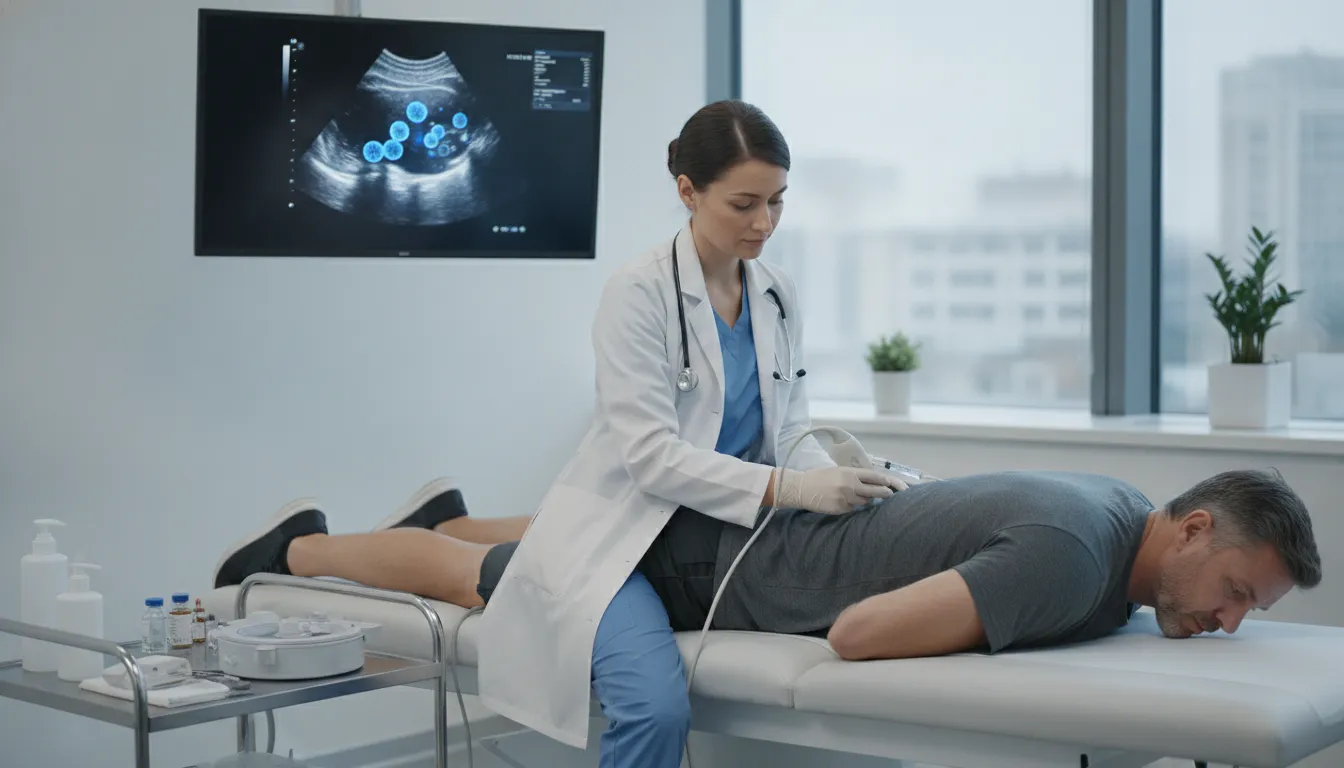
People use “decompression” to describe more than one approach. At home, it often means a comfortable position or gentle movement intended to reduce the feeling of stiffness or pressure. In a clinical setting, non-surgical spinal decompression may use a motorized table and controlled traction. The treatment plan, expected benefits, risks, and alternatives depend on the person’s symptoms and evaluation.
Home exercises do not reproduce a clinical treatment, diagnose a disc or nerve problem, or guarantee relief. They are best viewed as one possible part of a broader movement and care plan. If a movement consistently worsens your symptoms, stop it and seek professional guidance.
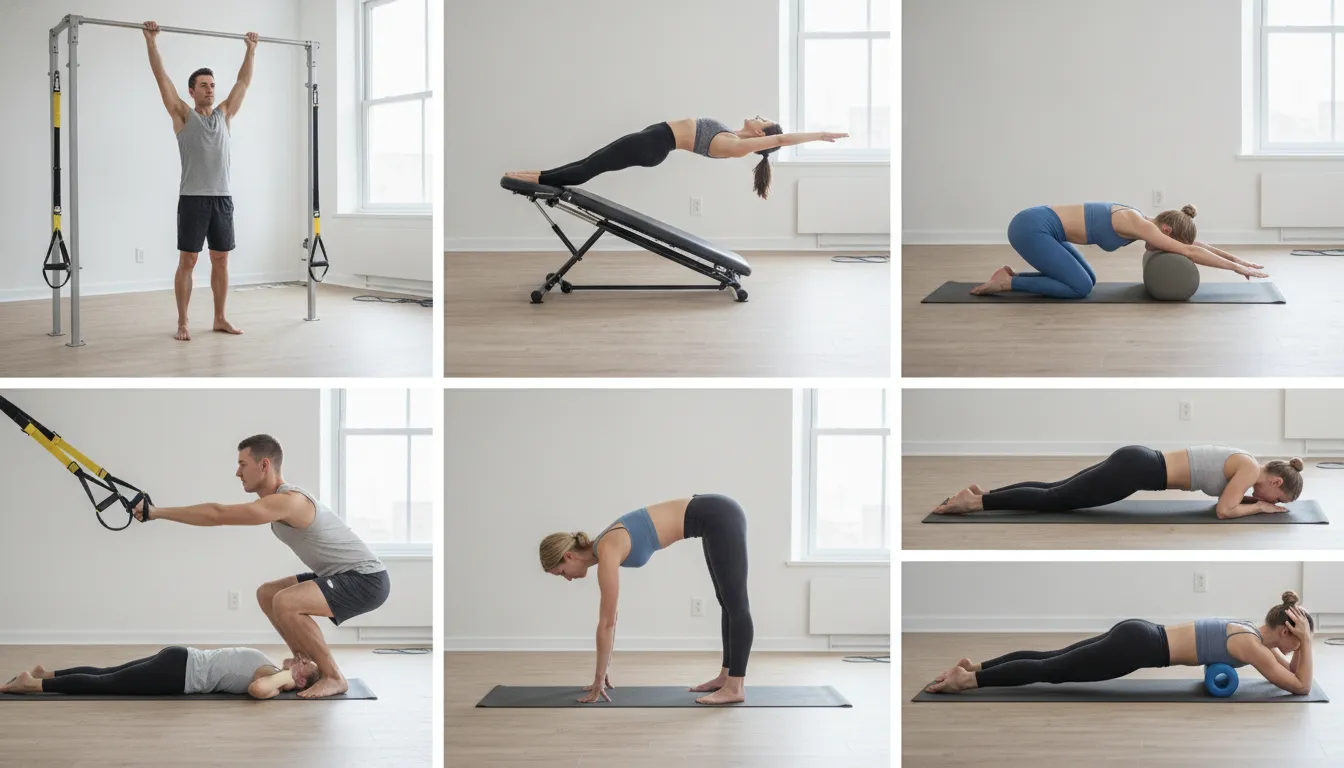
Seven Gentle Exercises to Support Back Mobility
The exercises below are general education, not a diagnosis or personalized treatment plan. Move slowly, breathe normally, and stay within a comfortable range. If you have a known spinal condition, recent injury, or symptoms that travel into an arm or leg, ask a qualified professional whether these movements are appropriate before trying them.
1. Supported 90/90 Rest Position
This supported position can give the lower back a break without asking you to stretch aggressively.
- Lie on your back on a firm, comfortable surface.
- Place your lower legs on a chair or sofa so your hips and knees are comfortably bent.
- Let your arms rest by your sides and breathe slowly for 30 seconds to five minutes.
- Come out of the position gradually. Stop if it increases pain, numbness, or tingling.
2. Child’s Pose With Support
A supported version may provide a gentle stretch through the back and hips. It is not suitable for everyone, especially if bending forward aggravates symptoms.
- Start on your hands and knees with your hands under your shoulders.
- Slowly move your hips toward your heels only as far as comfortable.
- Rest your chest or forehead on pillows if that makes the position easier.
- Hold for several relaxed breaths, then return to the starting position.
3. Cat-Cow Mobility
This controlled movement takes the spine through a small range of flexion and extension. The range should remain easy rather than forceful.
- Begin on your hands and knees, with your knees under your hips.
- Slowly round your back while allowing your head and neck to follow comfortably.
- Then move toward a neutral or gently extended position without dropping your stomach or forcing your neck.
- Repeat five to ten times at a pace that feels controlled.
4. Pelvic Tilts
Pelvic tilts introduce gentle abdominal engagement and awareness of the lower back’s position.
- Lie on your back with your knees bent and your feet flat on the floor.
- Gently tighten your abdominal muscles and let your lower back move toward the floor without pushing hard.
- Hold for about three to five seconds, then release.
- Repeat five to ten times while breathing normally.
5. Single Knee-to-Chest Movement
This movement may feel comfortable for some people with lower-back stiffness, but a deeper stretch is not necessarily better.
- Lie on your back with both knees bent.
- Bring one knee toward your chest only until you feel a mild, comfortable stretch.
- Hold for 10 to 20 seconds, then slowly lower the leg.
- Repeat on the other side. Skip the movement if it increases leg symptoms or back pain.
6. Standing Overhead Reach
A standing reach can interrupt long periods of sitting and encourage comfortable movement through the trunk.
- Stand near a stable surface for balance if needed.
- Reach both arms upward without forcing your lower back into an arch.
- Take two or three slow breaths, then lower your arms.
- Repeat three to five times. Keep the movement small if your shoulders or back are uncomfortable.
7. Easy Walking
Walking is not a traction treatment, but it is a practical way to maintain general movement when walking is comfortable for you.
- Begin with a short, easy walk on a level surface.
- Keep your pace relaxed and your stride natural.
- Increase time gradually only if your symptoms remain stable during and after the walk.
- If walking increases radiating pain, weakness, numbness, or unsteadiness, stop and seek guidance.
How to Exercise More Safely
Before starting a new routine, consider your health history, current symptoms, and the activities that reliably make your back feel better or worse. Use a stable surface, avoid holding your breath, and do not bounce or force a stretch. A gentle sense of movement is different from sharp pain or a symptom that spreads.
Stop and seek professional advice if an exercise causes new or worsening pain, numbness, tingling, weakness, balance problems, or symptoms that travel farther into an arm or leg. Seek urgent medical care for severe or rapidly worsening weakness, loss of bladder or bowel control, numbness in the saddle area, fever with back pain, or back pain after a significant injury.
A professional opinion is especially important before trying new back exercises if you have had spinal surgery, a recent fracture or significant injury, severe osteoporosis, known spinal instability, a tumor or infection, progressive neurologic symptoms, or pregnancy. This list is not exhaustive, and an evaluation is the best way to discuss your individual situation.
Can These Exercises Replace Non-Surgical Spinal Decompression?
No. Home exercises and non-surgical spinal decompression are different approaches. A home routine may support mobility, strength, and confidence with movement. Clinical decompression may involve controlled traction delivered on specialized equipment, but whether it is appropriate depends on an examination, health history, symptoms, and treatment goals.
If you are considering non-surgical spinal decompression, ask what the evaluation will include, what alternatives are available, what risks or limitations apply to you, and how progress will be assessed. A careful plan should support your ability to walk, work, sleep, exercise, and participate in the activities that matter to you. It should not depend on a guaranteed outcome or a fixed number of sessions.
For information about how Sigma Core Medical Center approaches low-back and other pain concerns, visit the spinal decompression therapy page. The page is an educational starting point, not a diagnosis. A consultation can help determine whether an individualized evaluation is appropriate.
When to Get an Individualized Evaluation
Consider professional guidance if your symptoms persist, return frequently, interfere with sleep or activity, or do not respond to a carefully paced movement routine. An evaluation can help distinguish ordinary stiffness from symptoms that need a different approach and can help you choose exercises that fit your current function.
Bring a short symptom history to the visit, including when the discomfort started, where it is located, whether it travels, what changes it, and which activities you want to resume. These details can make the conversation more useful.
Frequently Asked Questions
What does spinal decompression therapy feel like? Clinical non-surgical decompression commonly involves lying on specialized equipment while controlled traction is applied. The experience varies by person and by the protocol used. Ask the treating professional what you should expect and tell them if any position or pressure is uncomfortable.
Are at-home decompression exercises safe for everyone? No. The appropriate movement depends on the cause of symptoms, health history, current function, and technique. Use the safety guidance above, stop if symptoms worsen, and seek individualized advice when you have a known condition or radiating symptoms.
How quickly should I expect results? There is no reliable one-size-fits-all timeline. Some people notice that a gentle movement feels comfortable right away, while others need a different plan. Persistent or worsening symptoms warrant an evaluation rather than repeated experimentation at home.
Can exercises fix a herniated disc or spinal stenosis? Exercises do not provide a guaranteed fix and should not be used to self-diagnose a disc or nerve condition. A qualified professional can discuss your symptoms, possible causes, conservative options, and when referral or additional evaluation may be appropriate.
Should I stretch if pain travels down my leg or arm? Do not force a stretch when pain, numbness, tingling, or weakness travels into an arm or leg. Stop the movement and seek professional guidance, especially if symptoms are new, worsening, or accompanied by balance changes or significant weakness.
What is the next step if back pain is limiting my activities? Start with an individualized conversation about your symptoms and goals. You can review Sigma Core Medical Center’s spinal decompression therapy information and schedule a consultation if you want to discuss whether an evaluation may be appropriate.
This article is for general education and does not provide medical advice, a diagnosis, or a treatment recommendation. Individual results and appropriate care vary.